
Last updated October 30, 2026
 Sweep & inspection
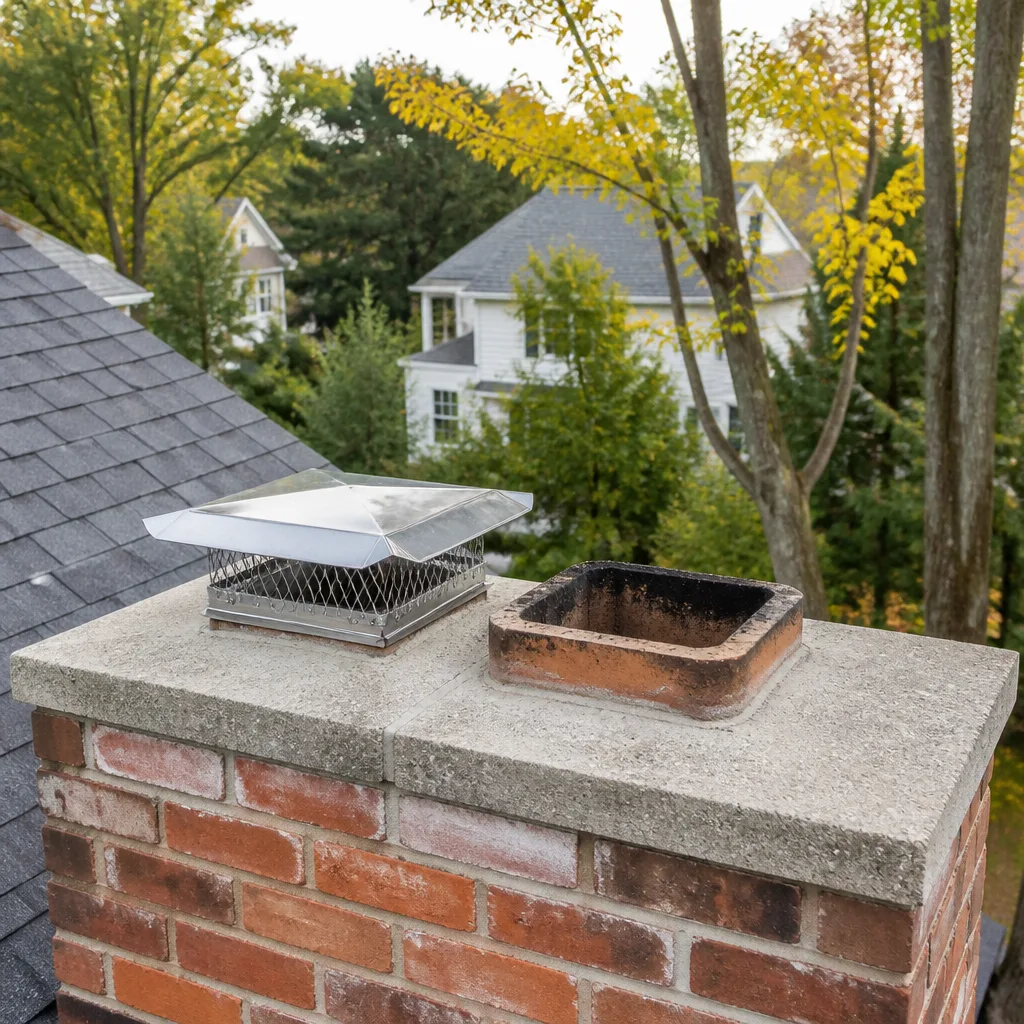
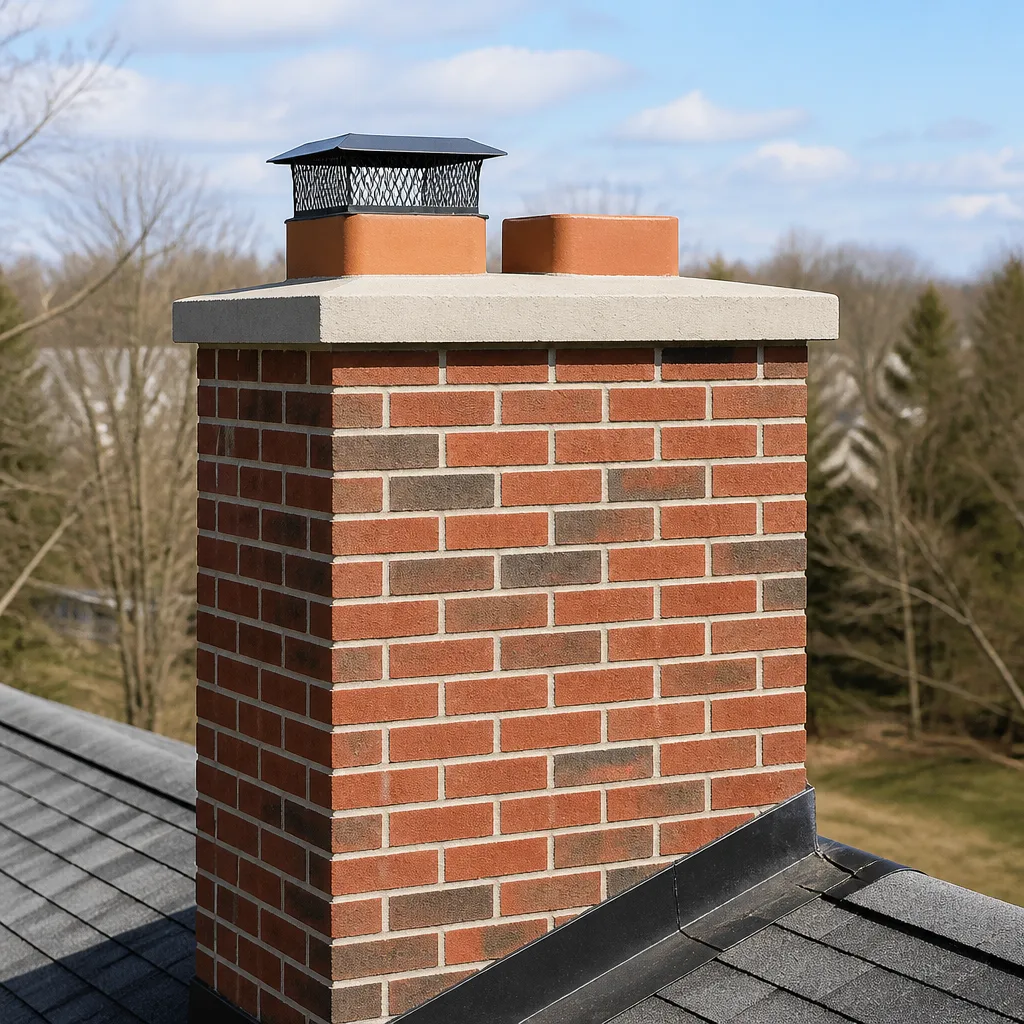 Caps & crowns
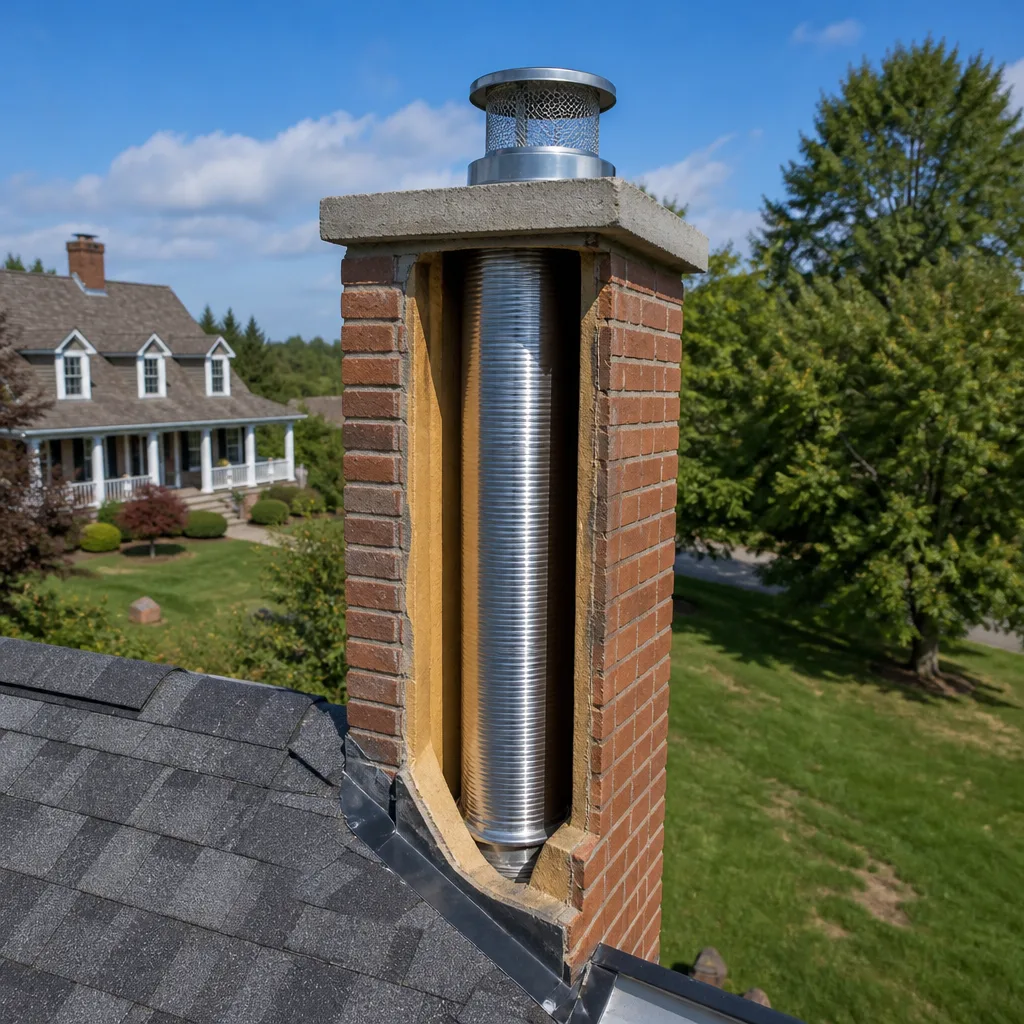 Flue relining
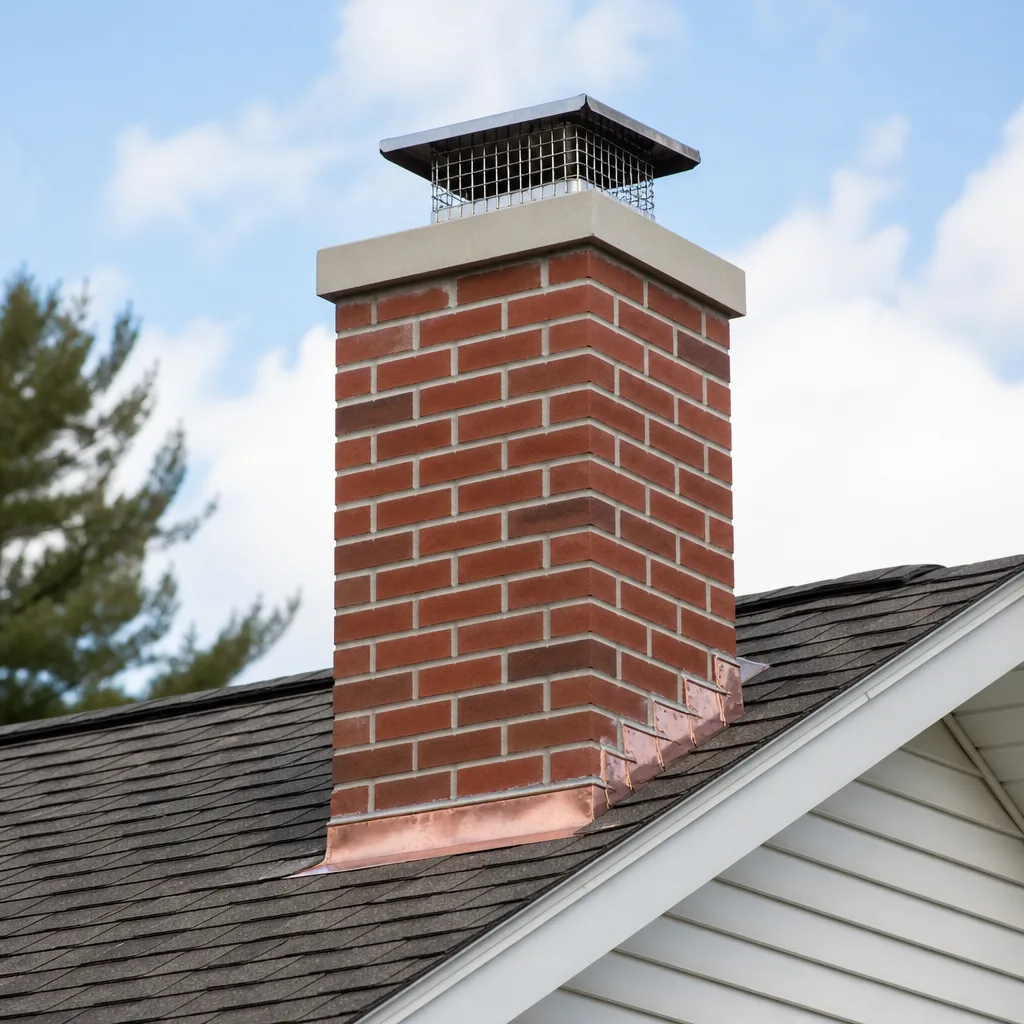 Masonry repair
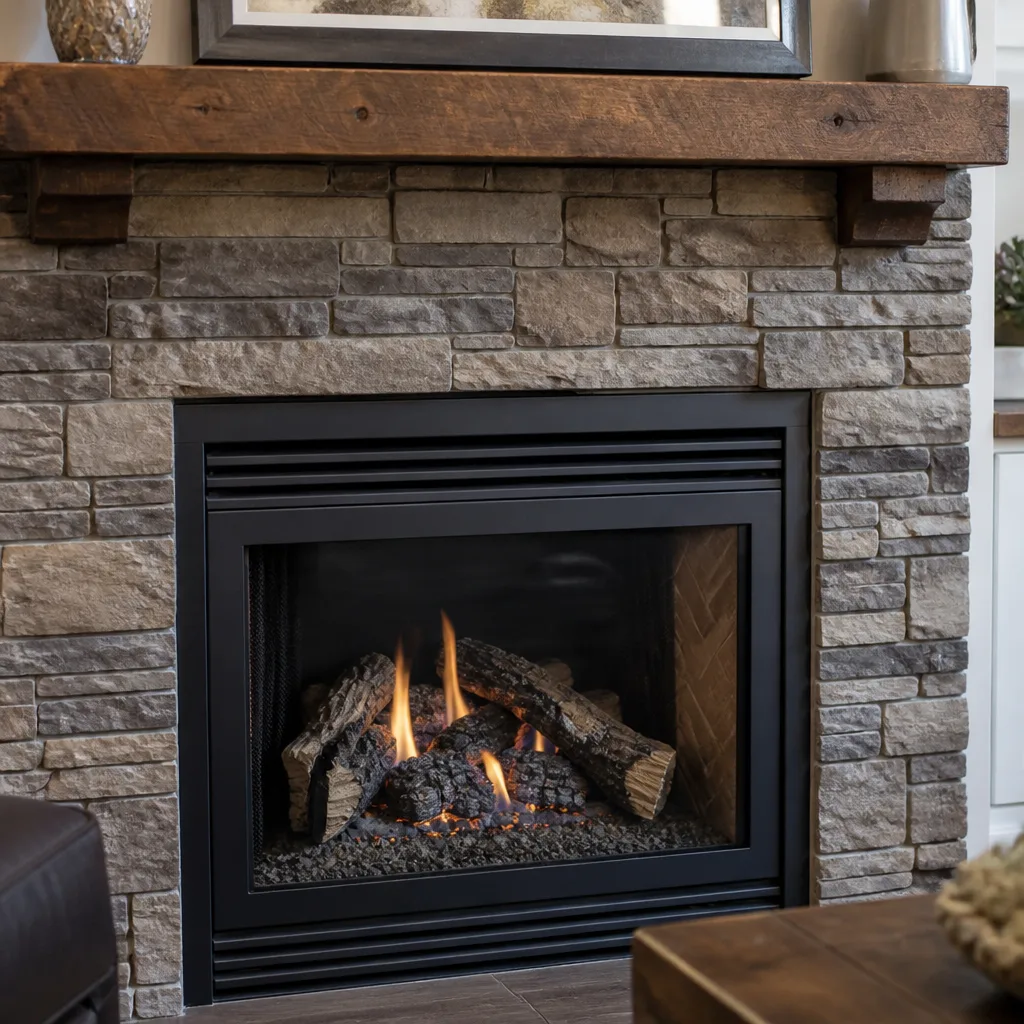 Gas fireplace service
Level 1 sweep and inspection to the NFPA 211 annual standard - flue, crown, cap, and flashing checked and photographed
Chimney sweep logs do not sweep chimneys. They loosen some creosote - which then falls where a brush and vacuum still have to collect it.
The Complete Guide to Chimney Cleaning in Hollywood
Most chimney maintenance guides are written as if every home in America has the same fireplace. Hollywood doesn’t. The housing stock here is dense with pre-1980 masonry fireplaces, Spanish-tile rooflines, and original clay flue liners that are now 40 to 70 years old. That changes everything about how a cleaning should be done, what the sweep needs to inspect, and what the homeowner should expect from the work. This guide maps exactly what’s inside a Hollywood chimney, why it degrades the way it does, and what a proper cleaning actually fixes.
Quick Answer
Chimney cleaning in Hollywood typically costs $180 to $350 for a standard sweep with a Level 1 inspection, and most jobs take 60 to 90 minutes. Hollywood’s pre-1980 masonry homes frequently need additional attention, including cracked clay liner assessment, wildlife intrusion checks, and stage 2 creosote treatment that generic sweeps often skip. The work should include a full inspection of the flue, not just a brush through the pipe.
Styles & brands we work with
Table of Contents
- What’s Actually Inside a Hollywood Chimney
- The Hollywood Creosote Profile: Why It’s Different Here
- Chimney Cleaning vs. Chimney Sweep: The Structural Difference
- Clay Tile Liners in Pre-1970 Hollywood Homes
- Level 1 vs. Level 2 Inspections: What Hollywood Homes Trigger
- Wildlife Intrusion and Pre-Cleaning Protocol
- Gas Inserts and Converted Fireplaces in Hollywood
- When a Cleaning Reveals a Repair
What’s Actually Inside a Hollywood Chimney
Pull apart a typical Hollywood chimney and you’ll find layers most homeowners never see: the firebox where combustion happens, the smoke chamber that funnels exhaust upward, the flue liner that contains heat and gases, and the crown and cap that seal the top. Each layer ages differently, and in Hollywood’s housing stock, the weak point is almost always the clay flue liner.
Here’s the layer-by-layer breakdown of what a sweep examines during a Hollywood chimney cleaning:
- Firebox: The brick or stone chamber where the fire burns. Mortar joints here crack from decades of heating and cooling cycles, especially in mid-century masonry construction. A cleaning should include checking for gaps where embers could reach combustible framing.
- Smoke chamber: The sloped section above the firebox that channels smoke into the flue. In pre-1980 Hollywood homes, this area is often unparged, meaning exposed brick with rough surfaces that trap creosote more aggressively than smooth, modern construction.
- Flue liner: The vertical passage running to the roof. Original clay tile, standard in Hollywood homes built before 1970, cracks under repeated thermal stress. We’ve seen liners with cracks you could slide a quarter into, and those cracks vent heat directly into surrounding masonry and framing.
- Chimney crown: The concrete slab at the top that sheds water. Hairline cracks here let rainwater seep down through the masonry, accelerating liner degradation and mortar erosion from the inside out. This is a year-round Hollywood issue, not just rainy season, because coastal-adjacent air carries moisture even in dry months.
- Chimney cap and spark arrestor: The metal cover that keeps rain, debris, and animals out. Missing or damaged caps are the single most common reason Hollywood homeowners find squirrels, birds, or raccoons in their flue.
Understanding this anatomy matters because a $99 “basic sweep” that only brushes the flue is not cleaning a Hollywood chimney. It’s skipping the smoke chamber, the crown, the firebox, and every joint where real problems hide. A proper cleaning addresses the full system.
The Hollywood Creosote Profile: Why It’s Different Here
Creosote is the byproduct of incomplete wood combustion. It builds up in three stages: stage 1 is a flaky, powdery soot you can brush away; stage 2 is a tar-like glaze that hardens into a shiny crust; stage 3 is a dense, hardened deposit that resembles dried candle wax and requires chemical or mechanical removal beyond standard brushing. Hollywood’s climate and fireplace usage patterns create a specific creosote profile that changes how a cleaning should be approached.
Two factors define the Hollywood creosote pattern:
Low-use fireplaces produce different buildup than daily-burning chimneys. In cold-weather cities, fireplaces burn hot and often, and creosote accumulates quickly but stays relatively soft. In Hollywood, fireplaces are often used occasionally, four to six months out of the year, rarely at high burn temperatures. Intermittent, low-temperature fires produce incomplete combustion, which creates stage 1 powdery creosote that sits in the flue for long stretches between uses. That powder then absorbs moisture from coastal-adjacent air and compacts, gradually hardening into stage 2 tar-like glaze that a standard brush cannot remove.
Moisture matters more than most guides admit. Hollywood sits close enough to the coast that ambient humidity cycles through the flue even when the fireplace is dormant. Humid air reacts with creosote, changing its chemical composition and making it stickier. A flue that would be a straightforward brush job in Phoenix becomes a more involved chemical treatment job in Hollywood.
What this means for cleaning method selection:
- Stage 1 powdery creosote responds to standard rotary brushing with polypropylene or wire bristles.
- Stage 2 tar-like glaze typically requires a chemical creosote modifier, such as a professional-grade powder or liquid treatment loosening the bond before mechanical removal.
- Stage 3 hardened creosote may require multiple treatment passes or specialized mechanical tools like rotary chains. Not every sweep carries this equipment; a full-service chimney company does.
- If a cleaning uncovers stage 2 or stage 3 deposits, the sweep should document it with photos. We provide camera documentation as part of every Hollywood cleaning where we encounter glazed creosote, because homeowners deserve to see the condition with their own eyes.
The practical takeaway: a Hollywood chimney that has gone two or three years between cleanings is not getting a quick brush-and-go. It likely needs chemical treatment, longer mechanical agitation, and a more thorough post-cleaning inspection than a chimney in a colder, higher-use market.
Chimney Cleaning vs. Chimney Sweep: The Structural Difference
The terms get used interchangeably, but they are not the same thing. A chimney cleaning removes deposits from the flue. A chimney sweep is the full process: inspection, deposit removal, component assessment, and post-cleaning verification. Conflating the two leads homeowners to underpay for incomplete work and then wonder why problems show up later.
Here’s what the full sweep process includes, step by step:
- Pre-inspection of the firebox and accessible flue. Before any brush goes up, the sweep looks for visible damage, blockages, and the creosote stage present. This determines the cleaning method.
- Area protection. Drop cloths, vacuum containment, and sealing of the firebox opening. A professional sweep leaves the room cleaner than they found it, not dusted in soot.
- Mechanical cleaning of the flue. Rotary brushes sized to the exact flue dimensions. The brush diameter matters: too small and you leave creosote behind; too large and you scrape clay liners.
- Smoke chamber and firebox cleaning. This is where many cheap sweeps cut corners. The smoke chamber accumulates creosote and debris and is an ignition surface.
- Chimney crown and cap inspection. From the roof, the sweep checks for crown cracks, damaged flashing, and cap condition. In Hollywood, this step catches water intrusion before it becomes masonry failure.
- Post-cleaning verification. Camera inspection of the full flue, or at minimum a visual verification of cleaned surfaces. We use camera documentation on every Hollywood sweep. If the homeowner can’t see the result, they don’t know what they paid for.
If a company quotes you $89 or $99 for a “chimney cleaning” in Hollywood, ask what’s included. In many cases, that quote covers only step 3: the brush through the flue. No smoke chamber cleaning. No crown inspection. No camera verification. That is not a sweep. That is a brush service that leaves the most important parts of the chimney untouched. Our approach at Firebrick Chimney Sweep is the full sweep, every time, because a partial job is not just incomplete; it creates a false sense of security that the chimney is safe when it is not.
Clay Tile Liners in Pre-1970 Hollywood Homes
Walk through Hollywood’s neighborhoods and you’ll pass thousands of homes built between 1920 and 1970 with original clay tile flue liners. Clay tile served as the standard liner material for decades. It handles normal heat cycles well for years, but after 40 to 70 years, thermal fatigue sets in. The tiles crack.
Clay tile cracks differently than the stainless steel liners in newer homes. Stainless flexes under heat and contracts when cool; it’s built to absorb thermal movement. Clay is rigid. Each heating season, the tiles expand. Each cooldown, they contract. Over thousands of cycles, hairline cracks form, usually near the joints where tiles meet. Those cracks widen over time. Eventually, a cleaning brush dragging across them can dislodge pieces of the liner.
During a Hollywood chimney cleaning, the sweep must inspect for:
- Vertical cracks running the length of a tile. These let heat and gases escape the flue into the surrounding masonry and, in some cases, directly against combustible framing.
- Offset tiles. When a tile shifts out of alignment, it creates a ledge where creosote accumulates and a gap where exhaust leaks.
- Spalling. The inner surface of the tile flakes away, weakening the liner and creating rough surfaces that accelerate creosote buildup.
- Missing tiles. A tile that has fallen completely creates a gap in the protective liner. This is an immediate repair situation, not a routine cleaning.
- Mortar joint erosion between tiles. Water intrusion, common in Hollywood’s coastal-adjacent moisture conditions, erodes the joints and loosens the tiles themselves.
If we discover a cracked clay liner during a cleaning, the homeowner gets photos. Not a verbal warning. Photos showing the full length of the crack, the location, and the condition of the surrounding tiles. Then we walk through the options. A full reline with a DuraFlex stainless system is one route. A HeatShield ceramic resurfacing application is another, and it restores the interior surface of a deteriorating clay liner without the cost and disruption of full replacement. Not every chimney company offers both options. We do, because we repair what we find, not just sweep around it.
Level 1 vs. Level 2 Inspections: What Hollywood Homes Trigger
The chimney industry uses three inspection levels defined by the National Fire Protection Association. Hollywood homeowners should understand the difference, because it determines how thorough the inspection during a cleaning actually is.
Level 1: The baseline inspection performed during routine maintenance when the chimney system has not changed since the last cleaning. The sweep visually inspects accessible portions of the flue, firebox, smoke chamber, and exterior chimney structure. This is appropriate for a fireplace that is cleaned annually and shows no signs of damage.
Level 2: Required under specific conditions: after a change to the system (a new appliance, a different fuel type, a new liner), after a real estate transaction, after a chimney fire, after a seismic event, or when a weather event may have damaged the chimney. Level 2 includes everything in Level 1 plus accessible attic and crawl space areas, and it typically involves camera scanning of the full flue interior.
Level 3: Reserved for cases where a Level 1 or Level 2 suggests a hidden hazard that requires removing portions of the chimney or building materials to access. This is rare and usually follows a known damage event.
Hollywood homes trigger Level 2 inspections more often than homeowners realize. The reasons are specific:
- Real estate transactions: Hollywood’s housing market moves constantly. If you bought a home in Hollywood in the past year and have not had a Level 2 inspection, you’re operating on the seller’s maintenance history, which may be incomplete or nonexistent.
- Earthquake activity: Southern California seismic events, even moderate ones, can shift masonry and crack liners. A Level 2 inspection documents that shift.
- Homeowner’s insurance reviews: Carriers increasingly request Level 2 documentation for older chimneys before writing or renewing policies, particularly in markets like Hollywood where mid-century masonry dominates.
- Pre-1970 construction with original liners: Any home of that age with no documented liner replacement should get Level 2 scrutiny at the next cleaning, regardless of whether the fireplace has been used regularly.
During a routine Hollywood chimney cleaning, we perform at minimum a Level 1 inspection. If the home’s history or condition indicates Level 2 is warranted, we tell the homeowner why and include the camera scan. The camera is not an upsell. It is the difference between knowing the flue is clean and knowing the flue is safe.
Wildlife Intrusion and Pre-Cleaning Protocol
Hollywood Hills homes sit at the edge of a wildland-urban interface. Squirrels, birds, and raccoons are not occasional visitors; they are permanent residents of the neighborhood, and a chimney without a proper cap reads like an invitation. Wildlife intrusion changes the pre-cleaning protocol, and any Hollywood sweep should know how to handle it.
What happens before a brush ever enters a wildlife-compromised flue:
- Identification of the intruder. The handling differs. Birds like chimney swifts are federally protected under the Migratory Bird Treaty Act. Squirrels and raccoons are not. Knowing what’s in the flue before disturbing it is a legal requirement, not a courtesy.
- Assessment of nesting stage. If nesting birds are present with active eggs or young, the cleaning is rescheduled until after the nesting season. Disturbing an active chimney swift nest carries federal penalties.
- Removal of deceased animals. In Hollywood, dead squirrels or birds in a flue are common, especially in chimneys that see infrequent use. A deceased animal creates a biohazard, an odor source, and a potential flue blockage. Professional removal with proper protective handling is part of the pre-cleaning protocol.
- Debris and nesting material removal. Squirrels and raccoons drag leaves, twigs, and other flammable material into the flue. That material must be fully cleared before any creosote removal begins.
- Camera inspection for damage. Wildlife can dislodge tiles, scratch liners, and damage dampers. The camera scan that follows debris removal documents what the animal may have broken.
- Cap and spark arrestor replacement or repair. After cleaning, the entry point gets addressed. A chimney without a functioning cap will be reinhabited. The fix is included in the full sweep scope, not billed as an afterthought.
If you have heard scratching, chattering, or fluttering from your Hollywood chimney, do not light a fire to smoke the animal out. That is dangerous for the animal and for you: a blocked or partially blocked flue can push smoke and carbon monoxide back into the house. Call a chimney professional who handles wildlife protocol correctly. We handle this regularly across Hollywood, and the cleaning does not begin until the flue is clear and the intrusion path is documented.
Gas Inserts and Converted Fireplaces in Hollywood
Many Hollywood homeowners have converted original wood-burning fireplaces to gas inserts or gas logs. The conversion changes the cleaning requirements. Gas burns cleaner than wood and produces no creosote, which leads some homeowners to assume the chimney needs no maintenance at all. That assumption is wrong in a specific way.
Gas fireplace exhaust is lower in temperature than wood smoke. It carries moisture vapor. When that moist, cooler exhaust travels up an old clay flue, condensation forms on the liner walls. That condensation is acidic. It slowly attacks clay tile and mortar joints, causing deterioration even in a fireplace that never sees a wood fire. A converted gas fireplace with an original unlined clay flue needs attention, including possible relining with a properly sized stainless system such as a DuraFlex liner rated for gas exhaust.
A gas fireplace chimney cleaning in Hollywood should include:
- Inspection of the gas log set or insert for proper positioning and burner condition
- Condensation damage assessment on the clay liner
- Verification of the flue size against the gas appliance’s exhaust requirements
- Carbon monoxide leak check at the firebox and damper areas
- Cap and venting inspection for blockage or corrosion
If a gas fireplace has been converted without a proper liner, the acidic condensation will eventually damage the masonry from the inside. The sweep should flag that during cleaning and explain the relining options. For every fireplace converted in Hollywood, a liner evaluation is not optional; it is the entire point of the service.
When a Cleaning Reveals a Repair
A chimney cleaning should never end with bad news delivered as a vague warning. It should end with a clear diagnosis and a specific path forward. This is where the difference between a sweep-only company and a full-service chimney specialist becomes visible. At Firebrick Chimney Sweep, the cleaning is the diagnostic. If we find a problem, we can fix it. That capability comes from working with materials supplied by Olympia Chimney and other professional-grade distributors, and from having the repair expertise in-house rather than referring customers to a separate mason.
Common findings during a Hollywood chimney cleaning that trigger repair recommendations:
- Cracked clay flue liner: Repairable via HeatShield ceramic resurfacing in many cases, or full relining with DuraFlex stainless. The choice depends on the extent of the damage.
- Deteriorated crown: Repairable with a proper crown coat or full crown replacement. Left untreated, the crack widens, and water intrusion accelerates.
- Damaged firebox masonry: Loose bricks, eroded mortar, or firebrick that has crumbled. Firebrick replacement is a masonry repair, not a sweep task.
- Damaged or missing damper: A damper that won’t close properly leaks heated and cooled air between the house and the flue, and it can allow downdrafts.
- Water intrusion stains inside the flue: Evidence that the crown, flashing, or cap has failed. The source gets located and fixed, not just noted.
The point of a Hollywood chimney cleaning is not to make the flue look clean. It is to determine whether the system is safe to operate, identify what’s failing, and fix it before a small crack becomes a fire hazard or a water-damage repair. One company handles the inspection, the cleaning, and the repair. That closed loop is what homeowners should expect from a chimney specialist in Hollywood.
Common Mistakes to Avoid
- Paying for a brush-only “cleaning” that skips the inspection. A broom through the flue without a camera check, smoke chamber assessment, and crown inspection leaves the most dangerous conditions undetected. Hollywood’s aging masonry chimneys need the full scope.
- Waiting until fall to book a cleaning. Every chimney company in Hollywood has a fall backlog. Booking in spring or summer means getting the cleaning done on your schedule, not waiting weeks into burning season.
- Ignoring a converted gas fireplace. Gas appliances still produce corrosive exhaust. An unlined or improperly lined converted fireplace degrades even when it’s never lit.
- Skipping a Level 2 inspection after buying a Hollywood home. The previous owner’s maintenance history is not a safety record. A Level 2 camera inspection establishes the baseline you’re actually working from.
- Assuming a chimney cap is optional. In Hollywood Hills neighborhoods, an uncapped flue will eventually house wildlife. The cap is cheap compared to the damage and the health hazards of animal intrusion.
- Treating a cracked clay liner as a cosmetic issue. A liner crack is a pathway for heat and gases to reach combustible materials. It is a repair item, not a cosmetic finding.
- Using a hardware store chimney cleaning log as a substitute for a sweep. These products loosen some creosote but do not remove it, do not inspect the flue, and do not catch cracked liners, blocked flues, or wildlife issues. They are not a maintenance plan.
See the difference
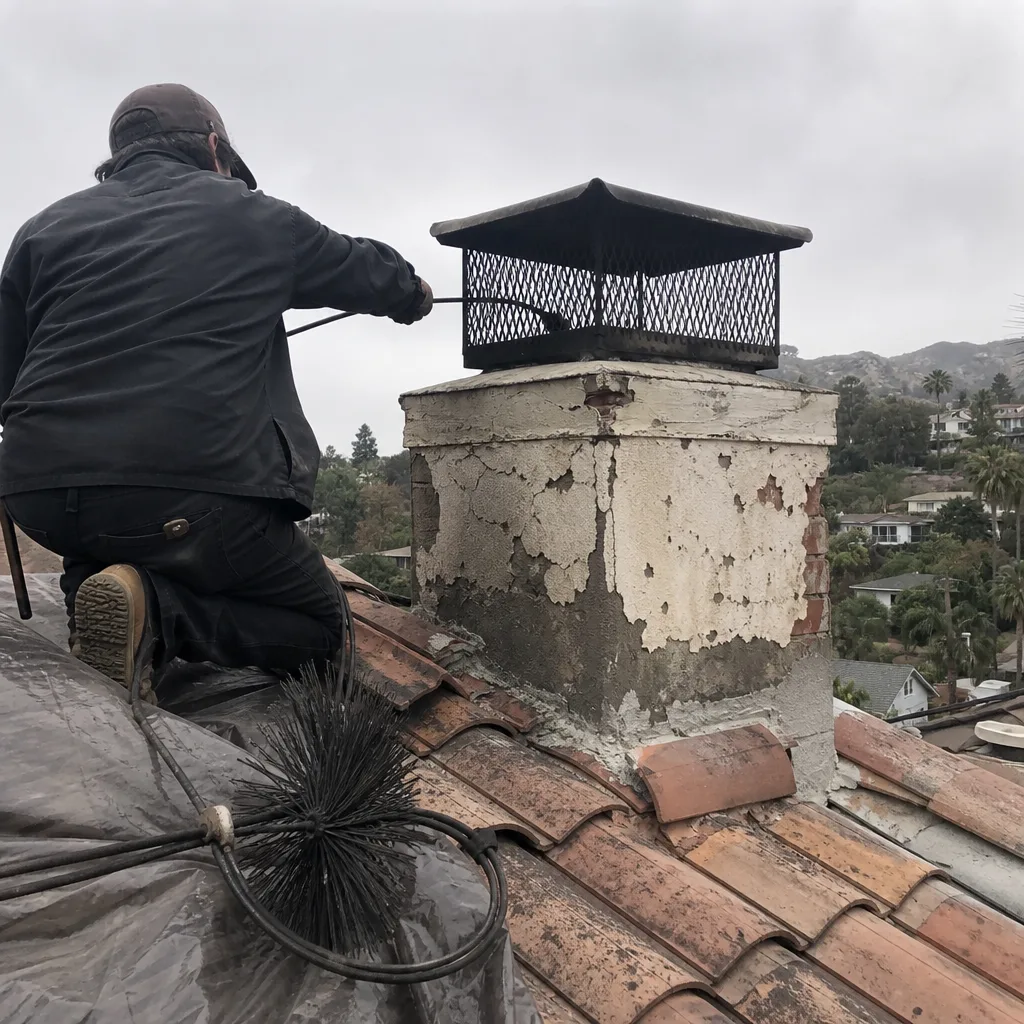 Before
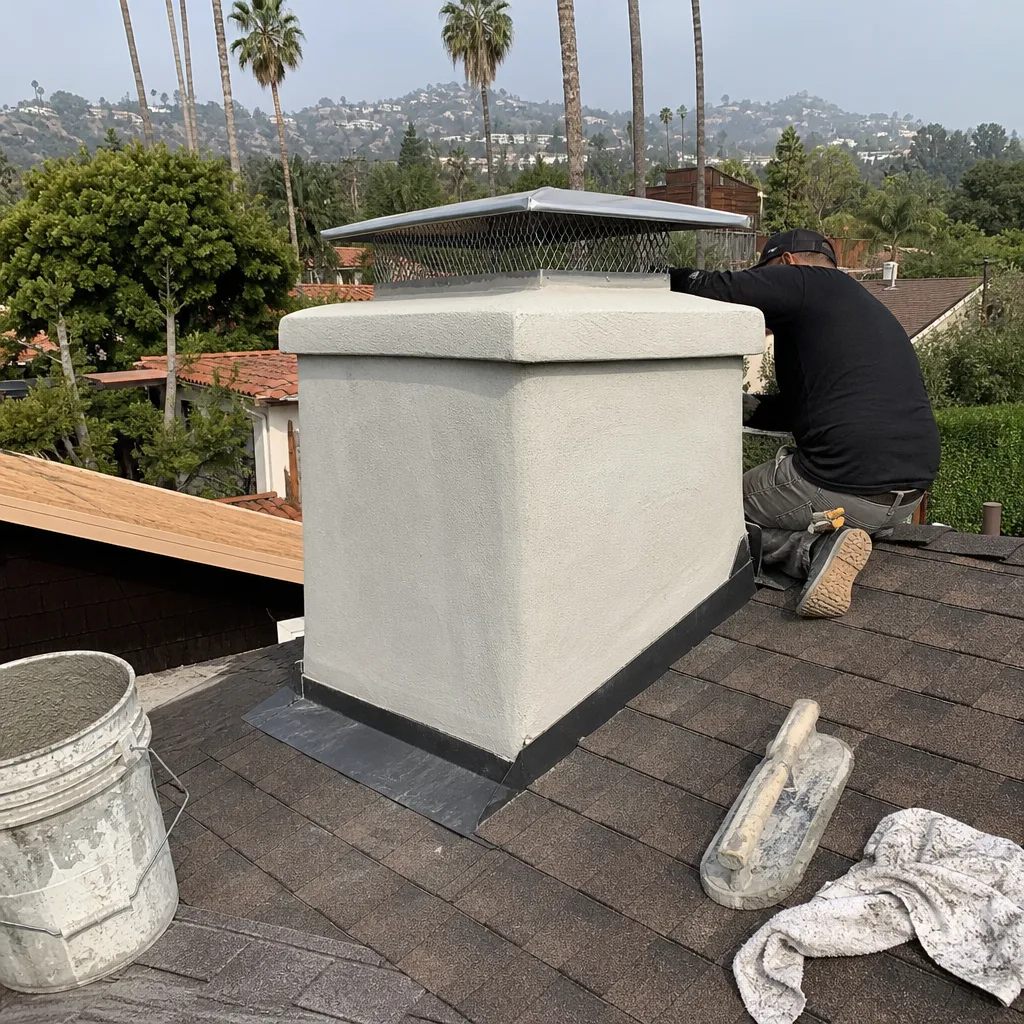 After
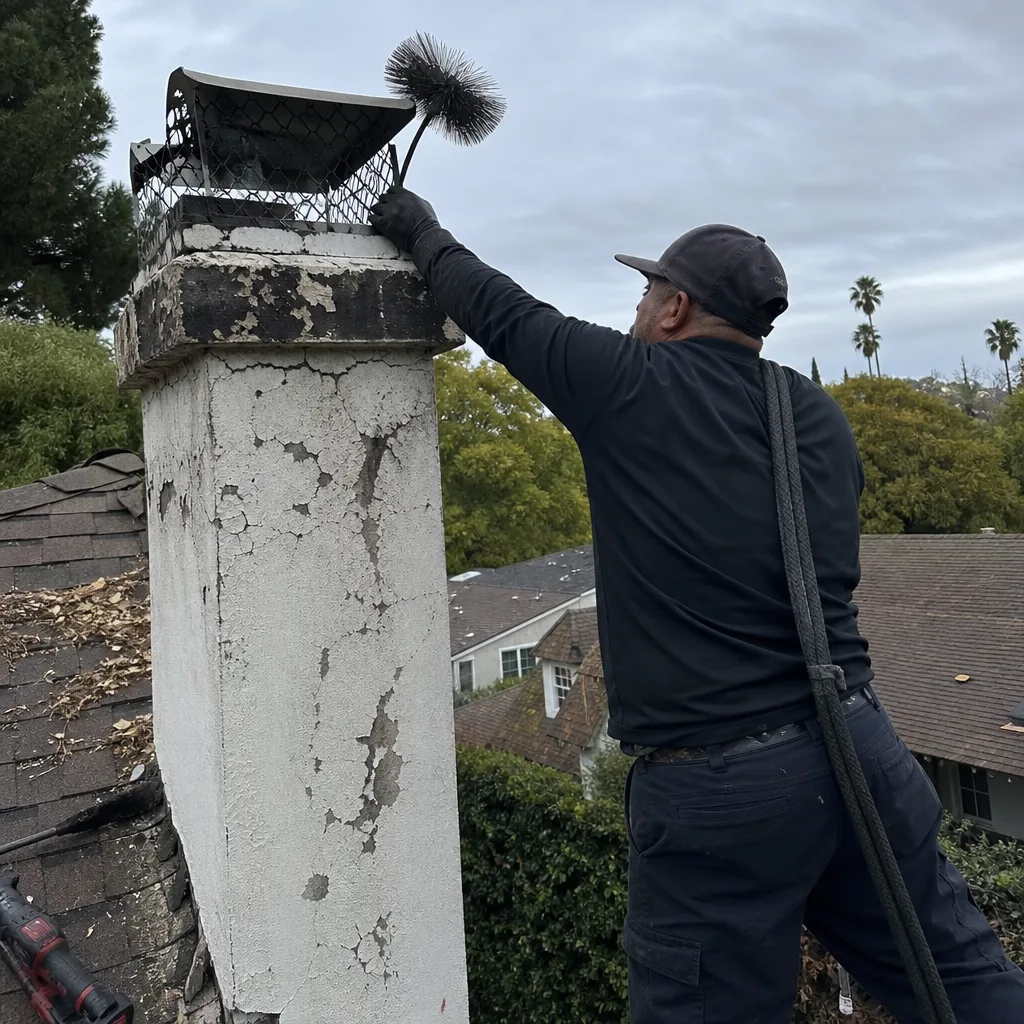 Before
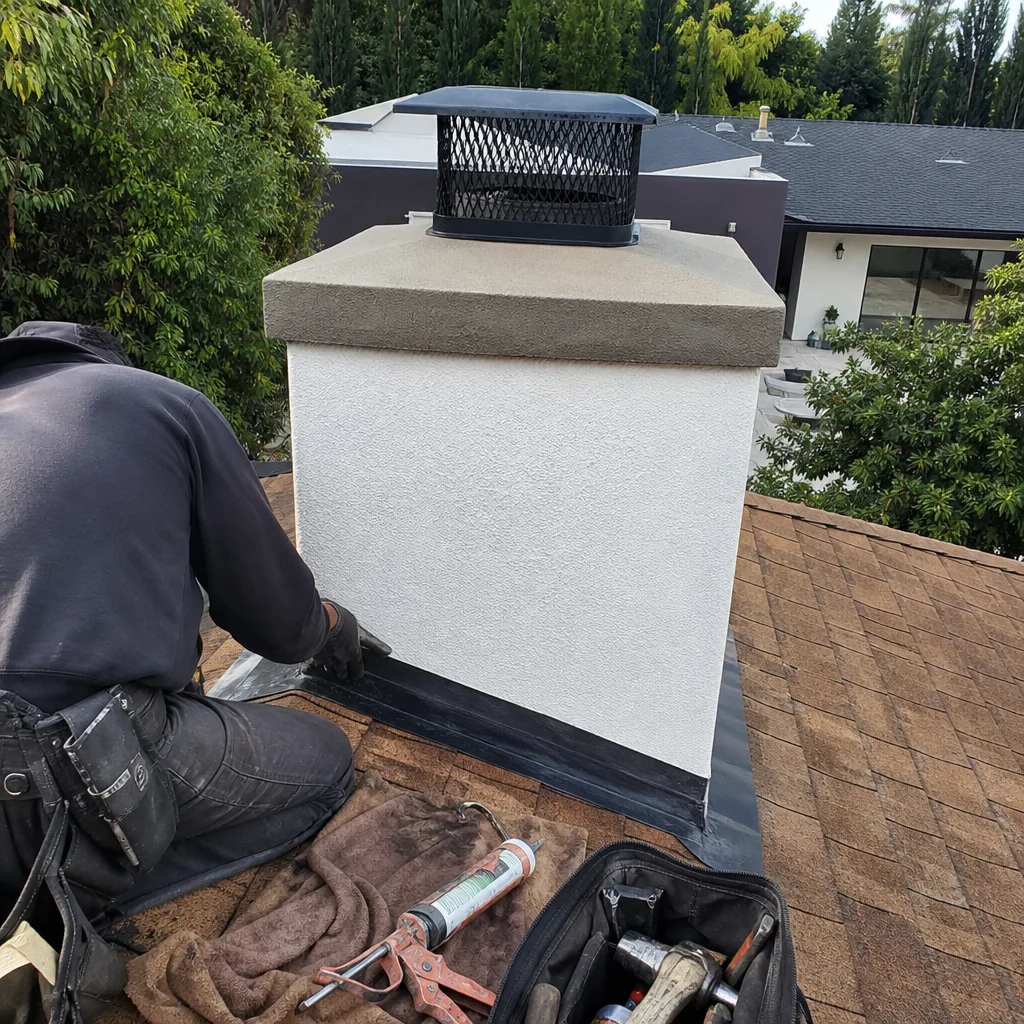 After
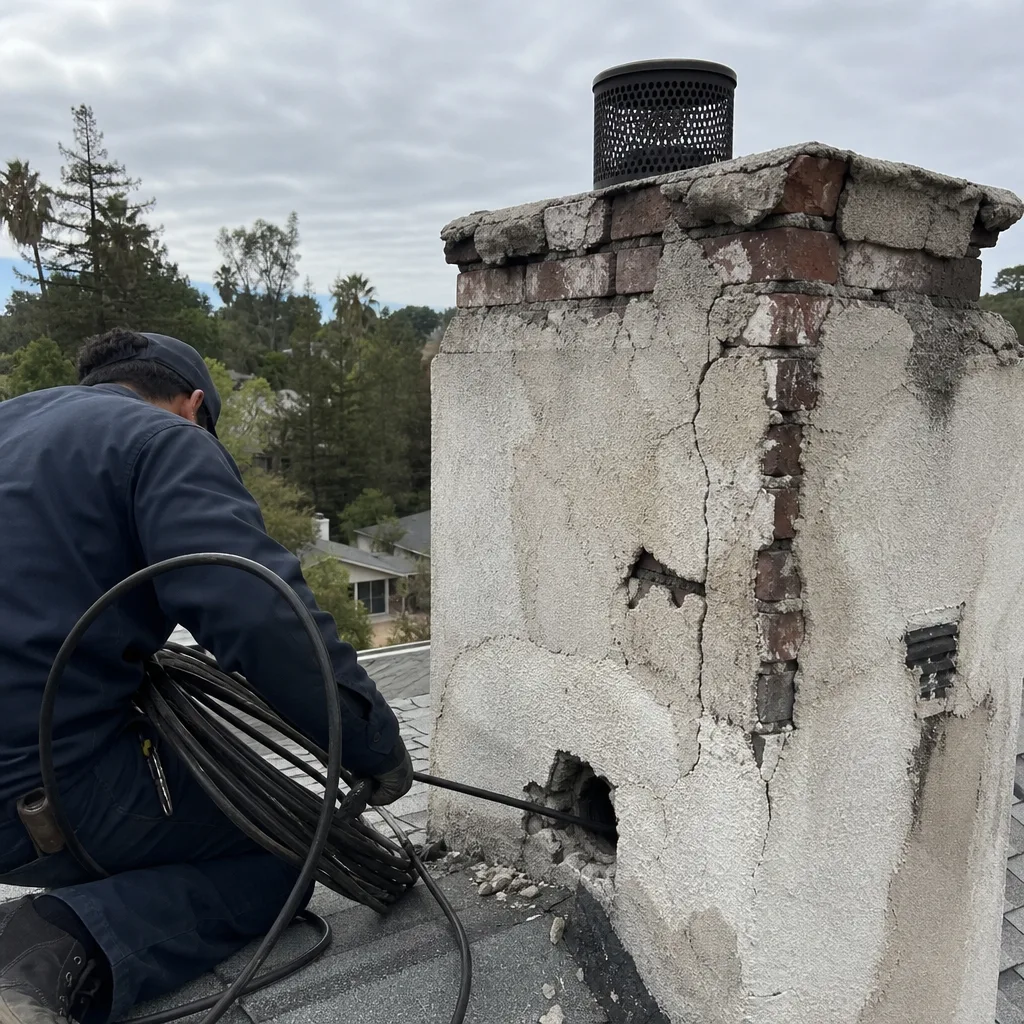 Before
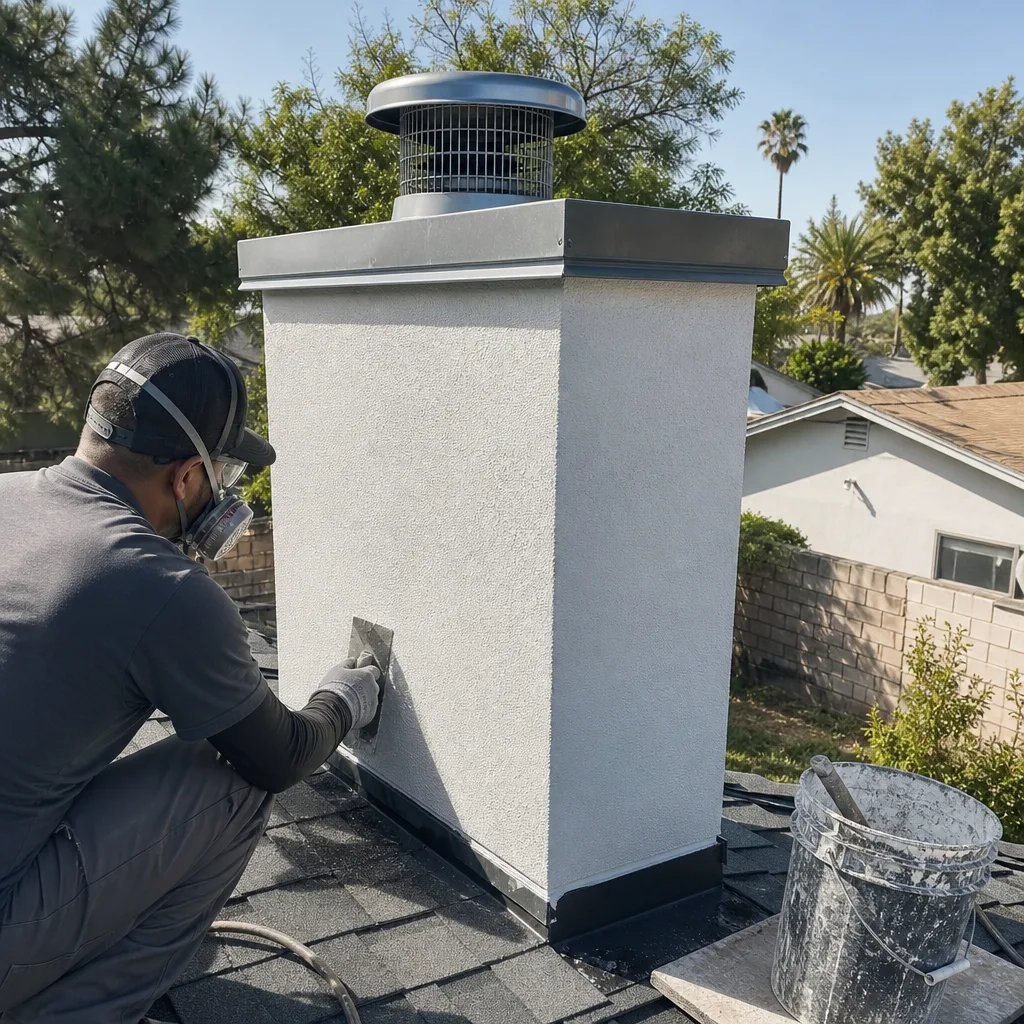 After
When to Call a Professional
Call a chimney professional if you see smoke backing into the room, smell a strong campfire odor when the fireplace is not in use, notice flaking or white staining on interior brick, hear animal sounds from the flue, or have not had the chimney inspected since buying your Hollywood home. If a home inspector flagged the chimney during escrow, get it addressed before the first fire of the season. If debris falls into the fireplace between uses, do not ignore it; that is a sign of active flue deterioration. Firebrick Chimney Sweep offers free estimates in Hollywood – call (866) 520-4943. We’ll assess the chimney, document what we find, and tell you plainly whether a cleaning is enough or whether repair work should happen first.
Frequently Asked Questions
A standard chimney cleaning with a Level 1 inspection in Hollywood typically runs $180 to $350. Factors that increase the cost include stage 2 or stage 3 creosote requiring chemical treatment, wildlife removal, a Level 2 camera inspection, or accessibility issues from steep Spanish-tile rooflines common in Hollywood. Call (866) 520-4943 for an exact quote – estimates are free.
The National Fire Protection Association recommends cleaning when creosote buildup reaches 1/8 inch or more, or annually if the fireplace is used regularly. In Hollywood, low-use fireplaces should still be inspected annually even if they don’t need a full clean, because moisture accumulation and wildlife intrusion happen year-round regardless of use.
Stage 1 creosote is a soft, powdery soot that brushes away easily. Stage 2 is a hard, tar-like glaze that bonds to the flue wall and requires chemical treatment and aggressive mechanical removal. Hollywood’s intermittent fireplace use pattern tends to produce stage 1 that compacts into stage 2 faster than in high-use cold-weather markets.
Gas fireplaces do not produce creosote, but they do require regular inspection and maintenance. Gas exhaust contains moisture vapor that condenses inside clay flue liners and creates acidic corrosion. A gas fireplace chimney should be inspected annually and cleaned when condensation damage, debris, or venting blockage is present.
Do not light a fire to drive them out. Blocked flues can push smoke and carbon monoxide back into the house, and chimney swifts are federally protected from nest disturbance. Call us at (866) 520-4943. We handle wildlife removal, protective protocols, and the post-removal cleaning, then install or repair the cap that keeps the animals from returning.
Yes, in many cases. HeatShield ceramic resurfacing restores the interior surface of a deteriorating clay liner by applying a specialized ceramic coating. For more extensive damage, a full DuraFlex stainless relining may be the better long-term solution. The choice depends on the crack pattern and the condition of the surrounding tiles, which a camera inspection during the cleaning will document.
Firebrick offers the full lifecycle: inspection, cleaning, and structural repair under one roof. We work with professional-grade chimney materials from HeatShield, DuraFlex, and Olympia Chimney, not whatever’s stocked at the hardware store. If the cleaning finds a cracked liner, a damaged crown, or eroded firebox masonry, we repair it in-house. No referrals to a mason you’ve never met and no second contractor to coordinate. That full-service scope, supported by professional-grade material access, is what makes the difference.
The Bottom Line
Hollywood’s chimney problems are not generic. The housing stock is older, the clay liners are at the end of their service life, and the coastal-adjacent moisture cycle changes how creosote forms and how fast it hardens. A proper chimney cleaning here means a full system sweep: flue, smoke chamber, crown, cap, and firebox, with camera documentation and a real inspection. It means knowing when a gas conversion needs a liner evaluation, when a Level 2 inspection is warranted, and when wildlife has made the flue unsafe. One company can handle all of that, and that’s exactly what we do. For more guides & resources, visit our blog, or call Firebrick Chimney Sweep at (866) 520-4943 to schedule a cleaning or get a free estimate.
Written by the team at Firebrick Chimney Sweep, serving Hollywood since 2012.