
 Sweep & inspection
 Caps & crowns
 Flue relining
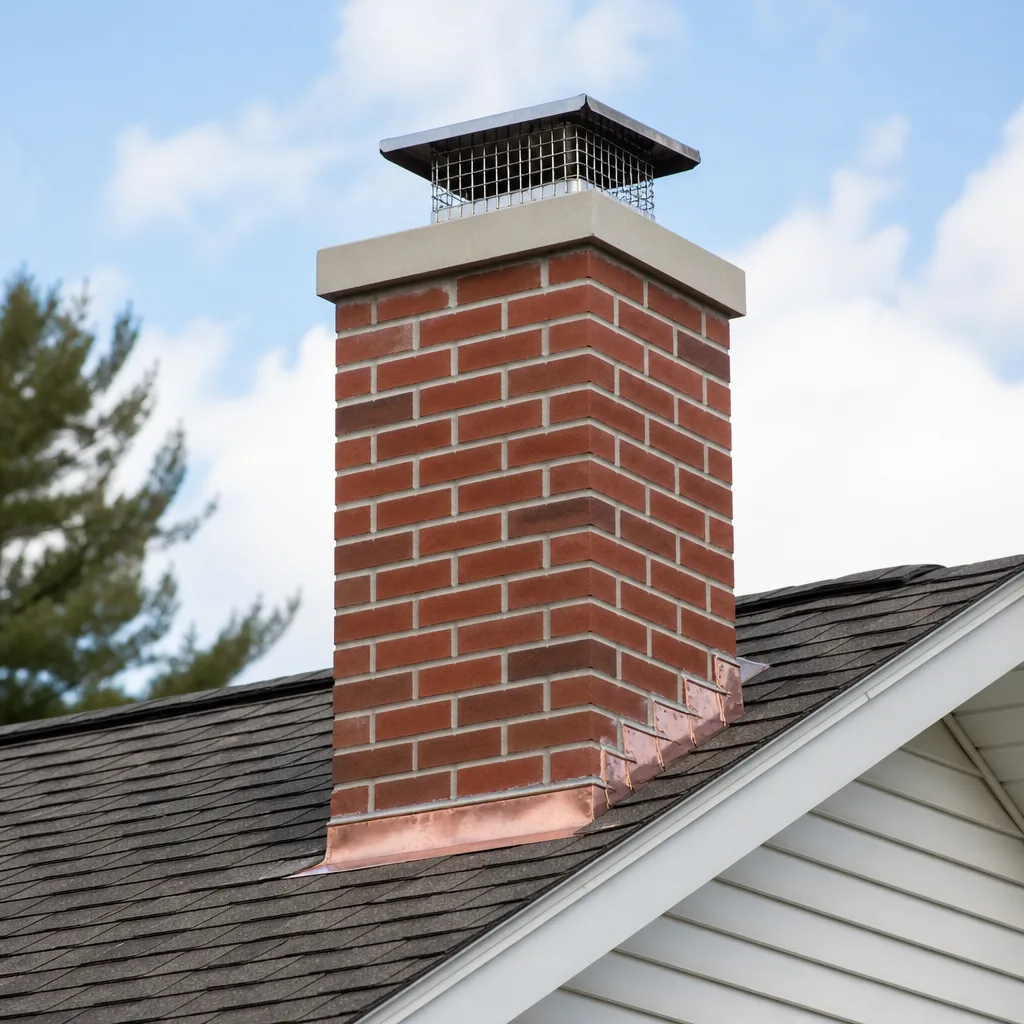 Masonry repair
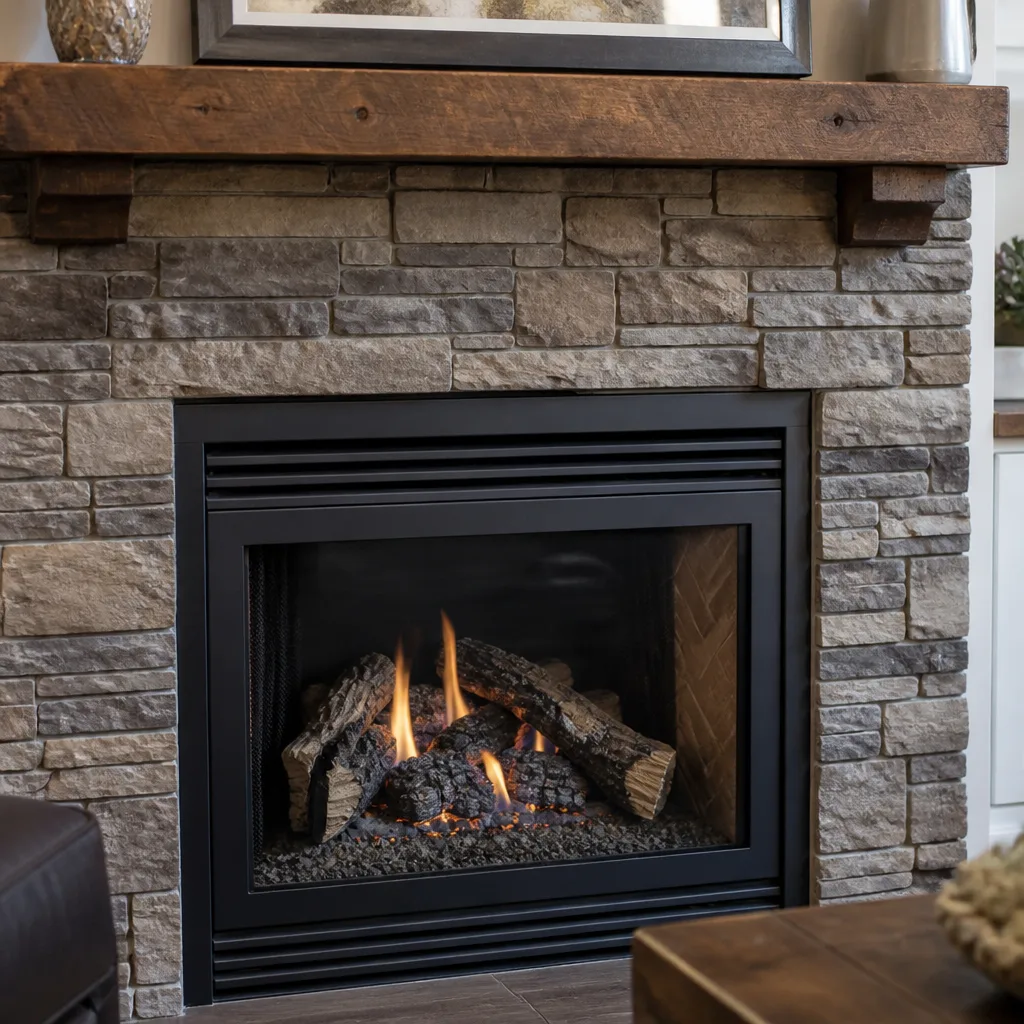 Gas fireplace service
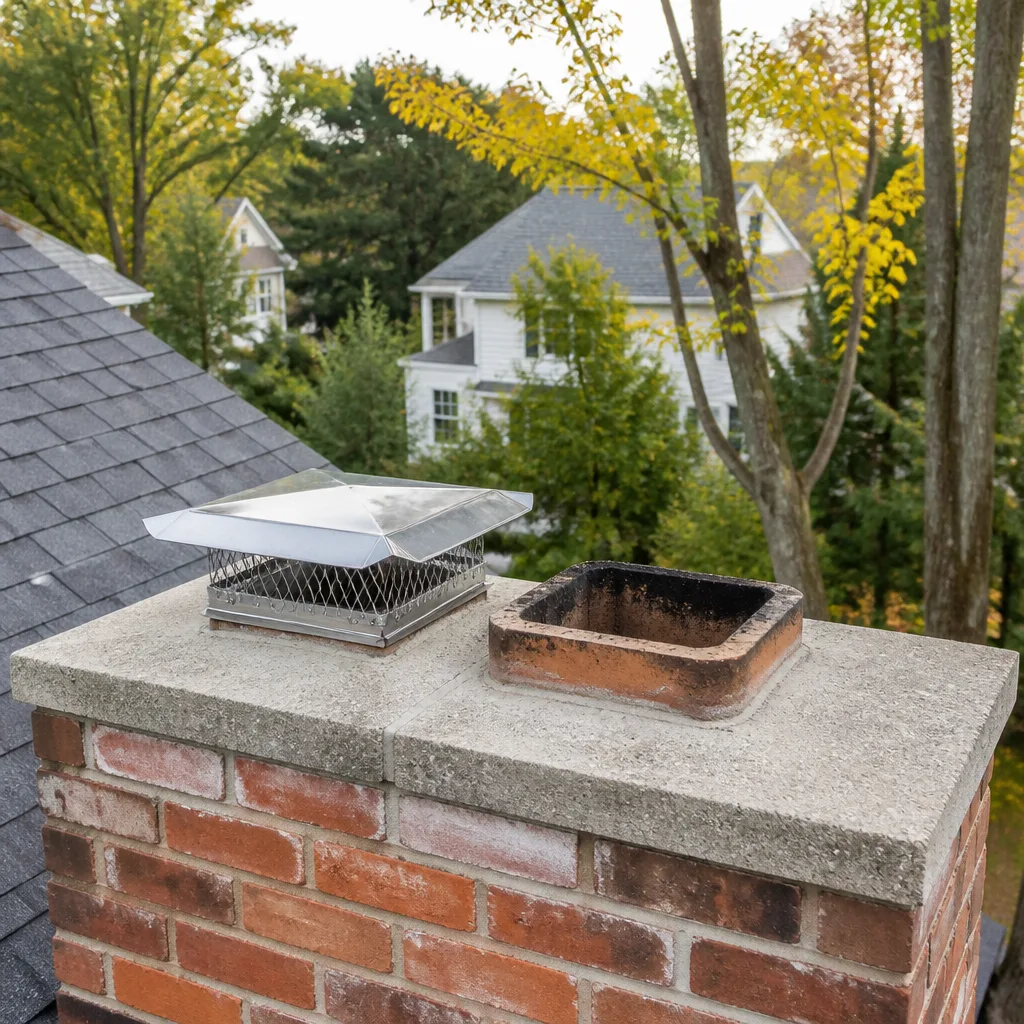
Level 1 sweep and inspection to the NFPA 211 annual standard - flue, crown, cap, and flashing checked and photographed
Chimney sweep logs do not sweep chimneys. They loosen some creosote - which then falls where a brush and vacuum still have to collect it.
Fast, Reliable Chimney Sweep Across Granite Hills
Granite Hills homeowners face a chimney problem that coastal San Diego never sees. Your fireplace sits idle for eight or nine months while acorns, bird nests, dust, and creosote accumulate inside the flue. Then the first cold Santa Ana night hits, you light a fire, and smoke rolls back into the living room. That’s the Granite Hills pattern, and we’ve been fixing it long enough to know exactly what’s happening before we climb the roof. If you need a Chimney Sweep in Granite Hills, call (866) 520-4943. We schedule around the seasonal rush, not behind it.
Why Firebrick Chimney Sweep Is Granite Hills’s Preferred Chimney Sweep Company
Granite Hills sits in San Diego’s inland East County foothills, where wood-burning fireplaces are common but used only a handful of nights per year. That pattern drives the work we do here. Homeowners along Granite Hills Drive, Rancho Vista Road, and the spread-out lots off Dehesa Road don’t deal with heavy soot buildup from daily burning. They deal with long-idle flues that have become storage units for rodents and birds during the dry, dusty months. Our techs know the housing stock: custom and ranch-style homes from the 1970s through 1990s, many with original masonry fireplaces and clay-tile liners that have never been inspected. Long driveways, older chimney structures, and roofs reached from varying elevations are the norm here, not the exception.
Nelson Quijada, who leads Firebrick Chimney Sweep, built the company around one principle: sweeping a chimney is only useful if you understand the entire system behind it. That’s why our Granite Hills customers get a camera inspection with every sweep, not just a brush up the flue. When a homeowner near Merritt Drive sees creosote glaze on their smoke chamber walls for the first time, on video, they understand exactly why we’re recommending what we’re recommending. Nothing gets sold without visual proof. In a market where Granite Hills homeowners are often told they need thousands of dollars in liner work they can’t verify, that camera changes the conversation entirely.
- Camera evidence with every inspection: you see what we see, before any repair recommendation is made.
- Repair capability beyond the sweep: we sweep it, we repair it. One company, no referrals.
- Professional-grade materials only: DuraFlex liners, HeatShield ceramic resurfacing, Copperfield components.
Styles & brands we work with
Chimney Sweep Certified in Granite Hills
Chimney Sweep Certified in Granite Hills means something specific to us: a full mechanical brushing of the flue, removal of all creosote and debris, and a camera inspection of the entire system from firebox to crown. A certified sweep in Granite Hills typically runs $189 – $289 for a standard single-story masonry fireplace. For a two-story chimney or one with a steep roof pitch, expect $249 – $349. The camera inspection is included. If we find a problem, you’ll see it on screen before we quote a fix.
Creosote and Soot Removal
After a long dry season, Granite Hills flues collect a particular kind of creosote: dry, flaky, and dusty from months of heating and cooling without any airflow. That’s the easiest to remove with a rotary brush. But if the fireplace saw years of occasional use before sitting idle, the creosote can harden into a tar-like glaze. A brush won’t take it off. We use a camera to identify third-degree creosote before we clean, so you’re not paying for a sweep that leaves the real hazard in place.
Annual Sweep and Level 1 Inspection
An annual sweep in Granite Hills makes sense even if you only burn twice a year. The issue isn’t how often you use the fireplace. It’s what moves into the flue during the months you don’t. A Level 1 inspection, included with every sweep, covers the accessible portions of the chimney: firebox, damper, flue, and cap. For most Granite Hills homes with original clay-tile liners from the 70s and 80s, this is the baseline service that catches problems before they become structural.
Gas Fireplace Cleaning in Granite Hills
Gas Fireplace Cleaning in Granite Hills is different from wood-burning work, and it’s more common here than people expect. Many custom and ranch homes in the 92021 ZIP were built with wood-burning masonry fireplaces, then converted to gas logs or gas inserts during renovations. Those conversions vent into flues that were never designed for gas. The result is a different kind of buildup: fine soot, mineral deposits from gas combustion, and sometimes corrosion on the damper and firebox components. A gas fireplace cleaning in Granite Hills typically runs $149 – $249, depending on whether it’s a log set or an insert.
Log Sets and Inserts
A gas log set sitting in an old masonry fireplace needs the flue swept just like a wood-burning one. Gas burns cleaner, but it doesn’t burn perfectly. Soot still deposits, and if the flue is partially blocked from the dry season, carbon monoxide has nowhere to go but into the house. We check the pilot assembly, the thermocouple, the logs themselves, and the venting path every time we clean a gas fireplace.
Venting and Carbon Monoxide Risk
Gas fireplaces in Granite Hills can create carbon monoxide risks that wood-burning units don’t, simply because homeowners think gas means no maintenance. A vented gas log set still needs a clear flue. A direct-vent insert needs its intake and exhaust verified clear of debris, spider webs, and the fine dust that blows in during Santa Ana winds. This is not optional. We test combustion-air flow and check for proper drafting on every gas fireplace cleaning we do. If the flue is blocked and you run the fireplace anyway, the gases don’t go outside they come into the house.
Trusted Brands We Service in Granite Hills
We service and install professional-grade chimney components in Granite Hills, not whatever’s stocked at the hardware store. We work with DuraFlex stainless steel liners, HeatShield ceramic resurfacing material, and Copperfield chimney caps and dampers. These are the brands certified chimney professionals use, because they hold up to the heat, moisture, and Santa Ana-driven wind loads that Granite Hills chimneys face every year. We also source Gelco and Olympia Chimney components when the job calls for them. Keeping professional materials in stock for our Granite Hills customers means faster turnaround on liner replacements, cap installations, and crown repairs. We don’t wait on a shipment from a big-box store. We’re already carrying what your chimney needs.
See the difference
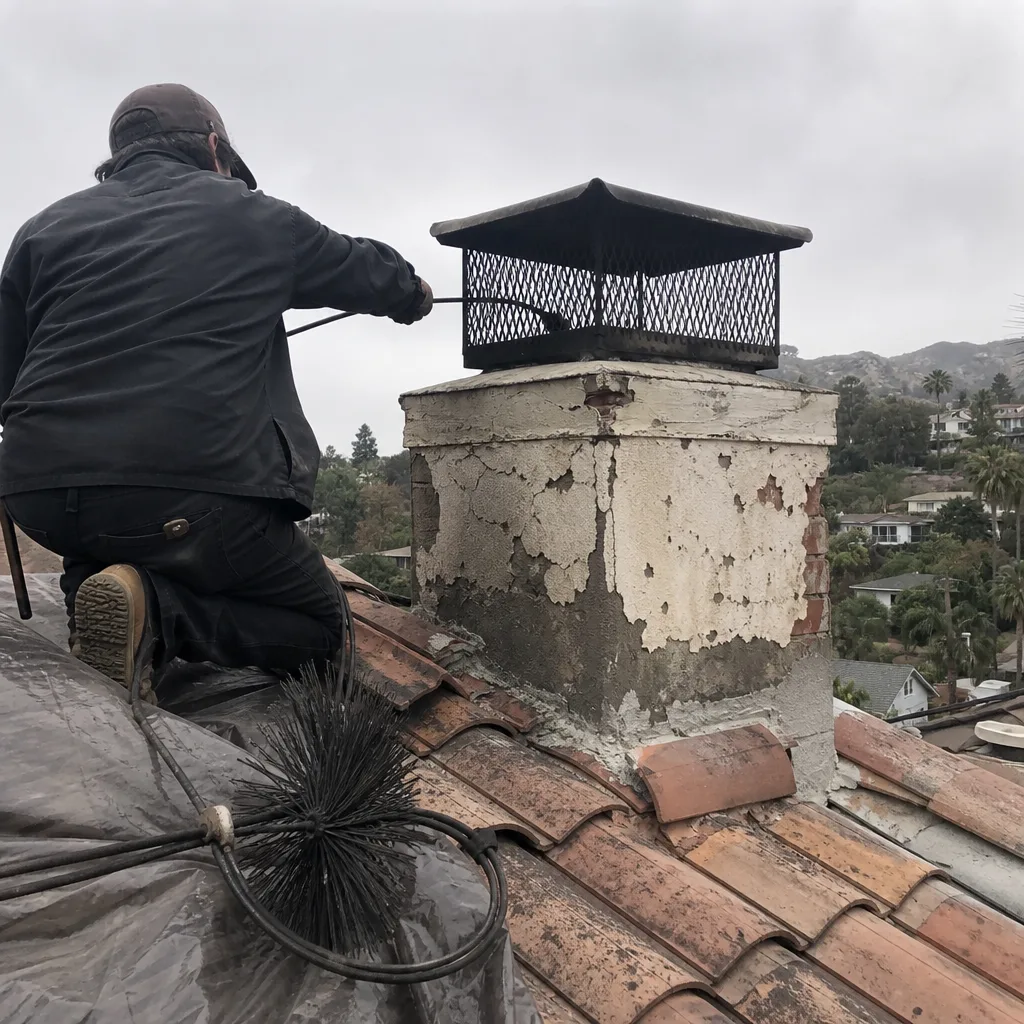 Before
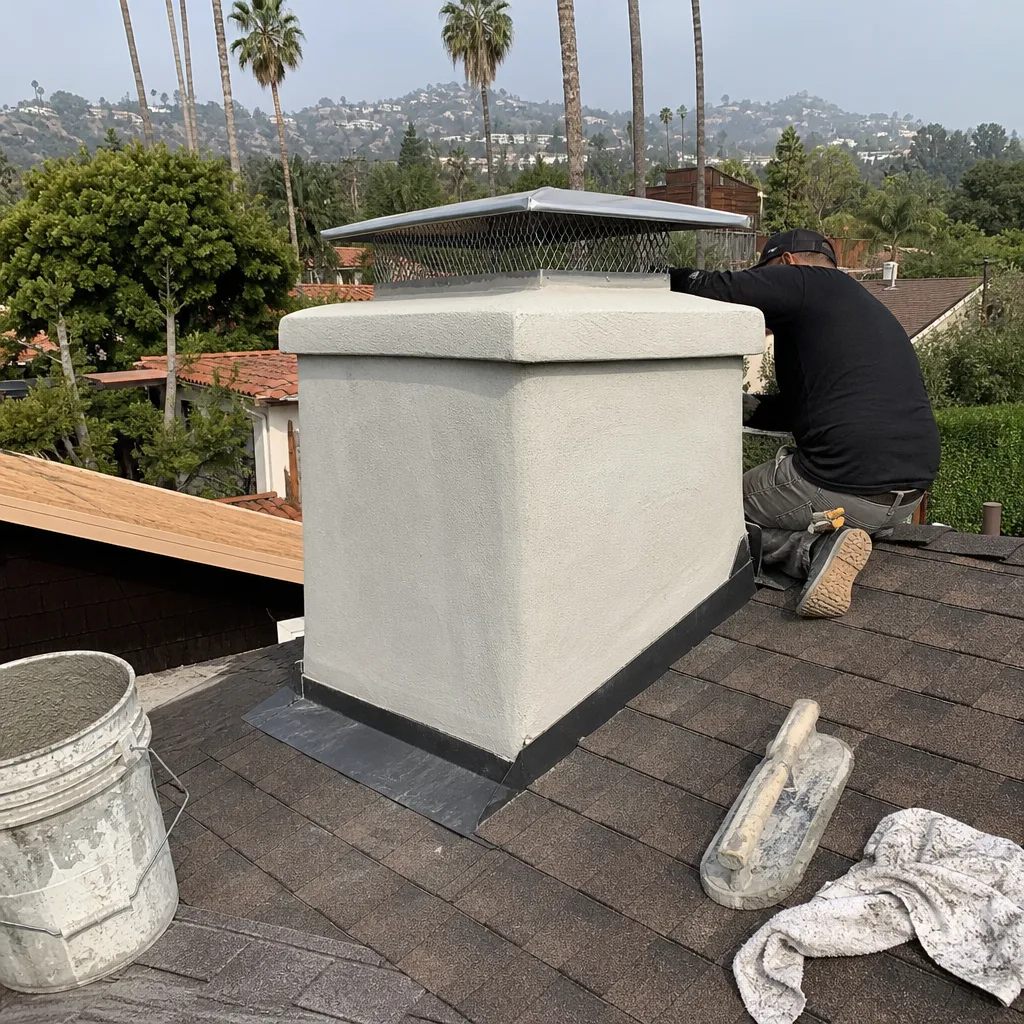 After
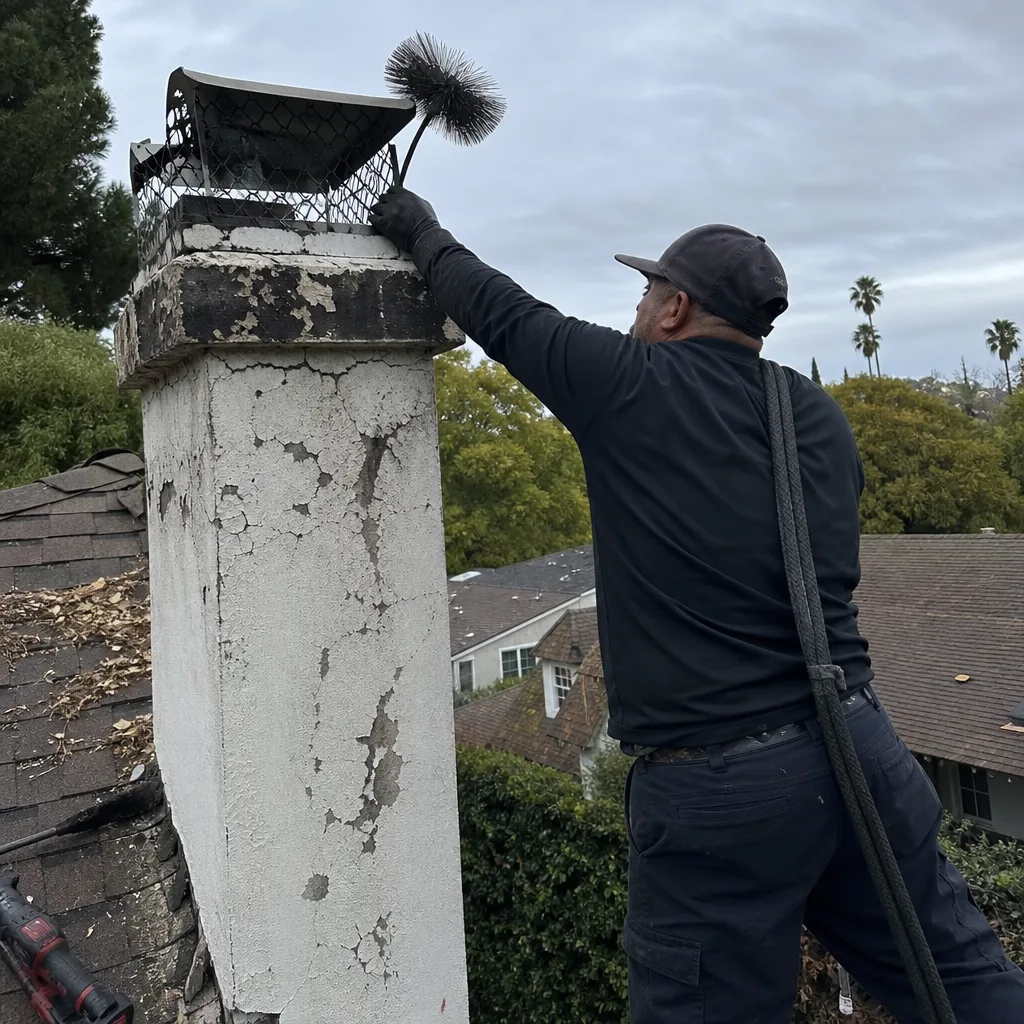 Before
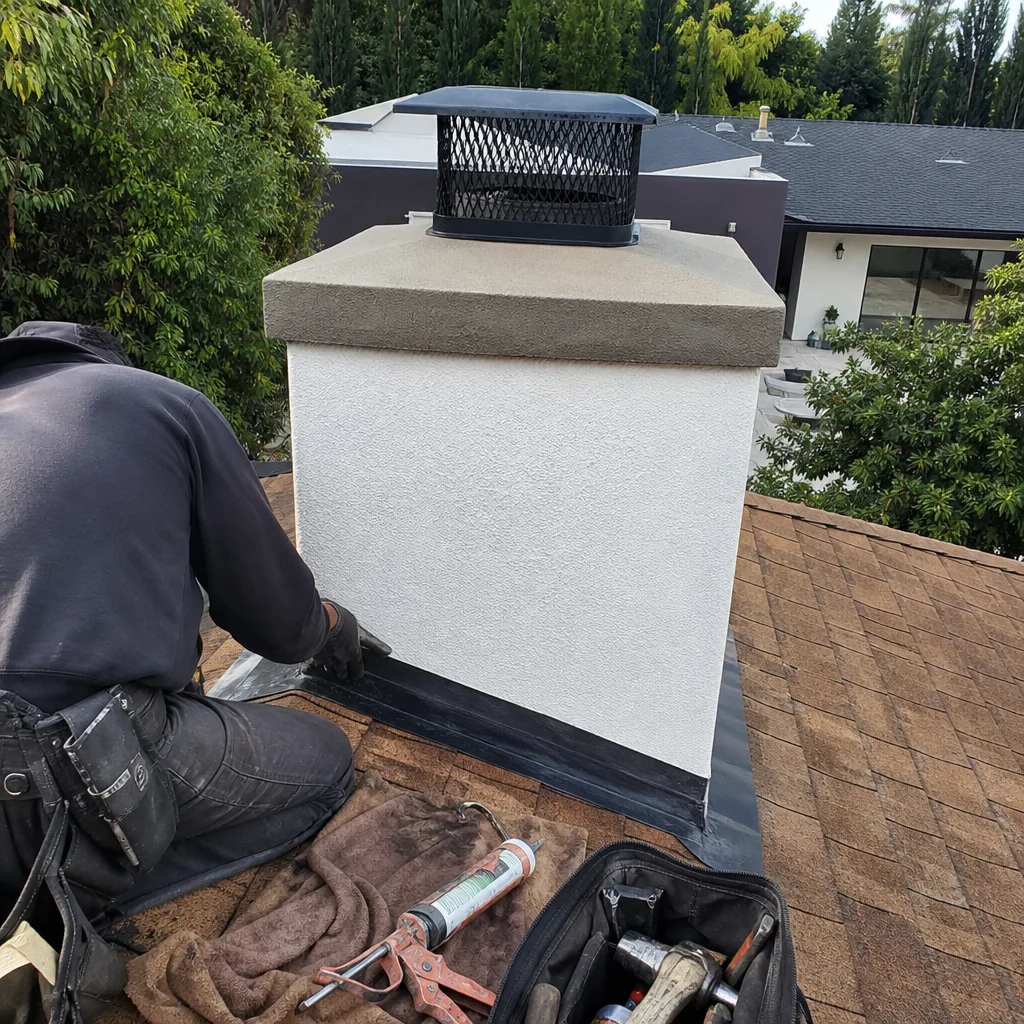 After
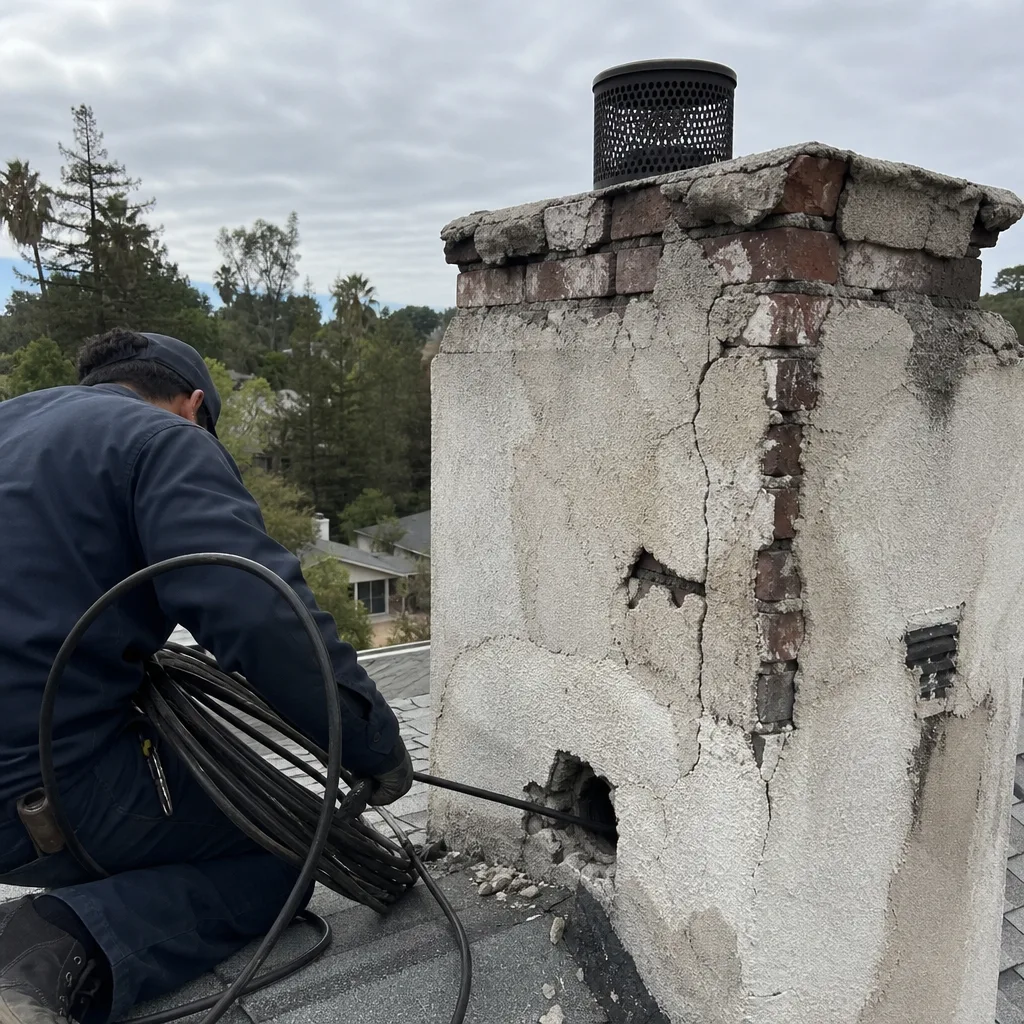 Before
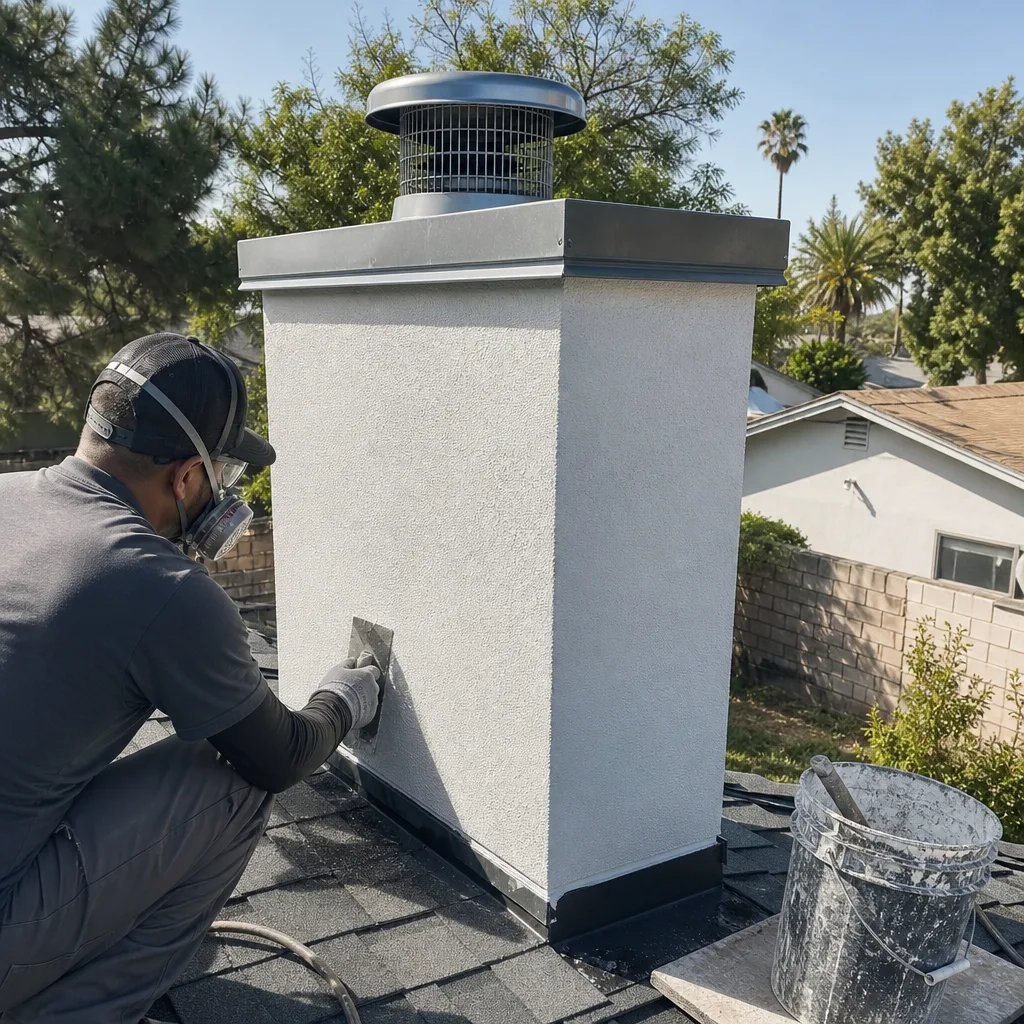 After
Common Chimney Sweep Problems We See in Granite Hills Homes
- Acorn caches and bird nests plugging flues. The long dry season turns your chimney into a storage bin. We’ve pulled more acorns and nesting material out of Granite Hills flues than any other debris type, and the blockage doesn’t reveal itself until the first cold night when smoke backs up into the house.
- Third-degree creosote glaze that a brush can’t remove. Years of occasional burning followed by long idle periods creates a hard, shiny creosote layer on smoke chamber walls. A brush alone leaves it in place, and the homeowner thinks the chimney is clean when it isn’t. We identify this with a camera before we touch the flue.
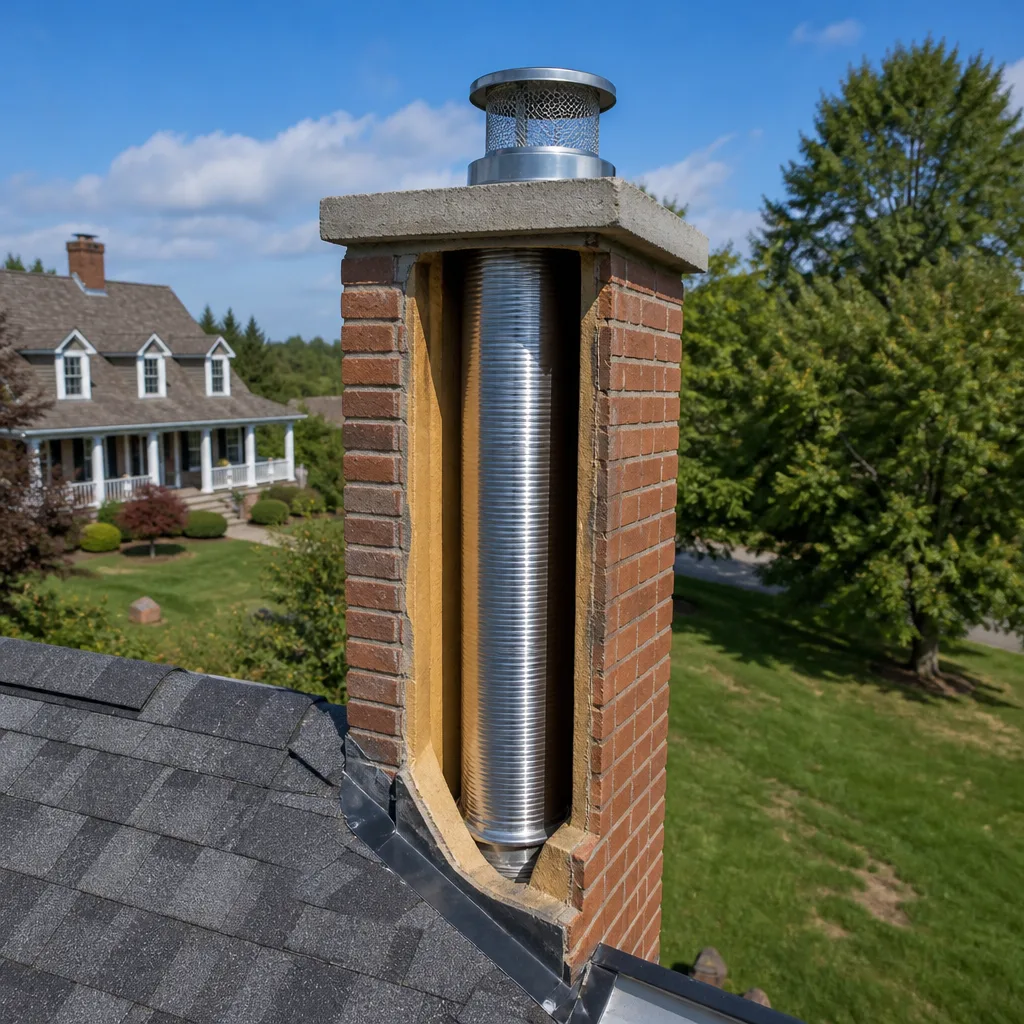
- Spalling mortar and cracked clay tiles on original masonry chimneys. Granite Hills homes from the 70s through 90s were built with clay-tile liners inside masonry stacks. Forty years of thermal cycling, plus the dry inland air, causes those tiles to crack and the mortar joints to fail. Gaps in the liner let creosote and heat reach the masonry, which is a fire path.
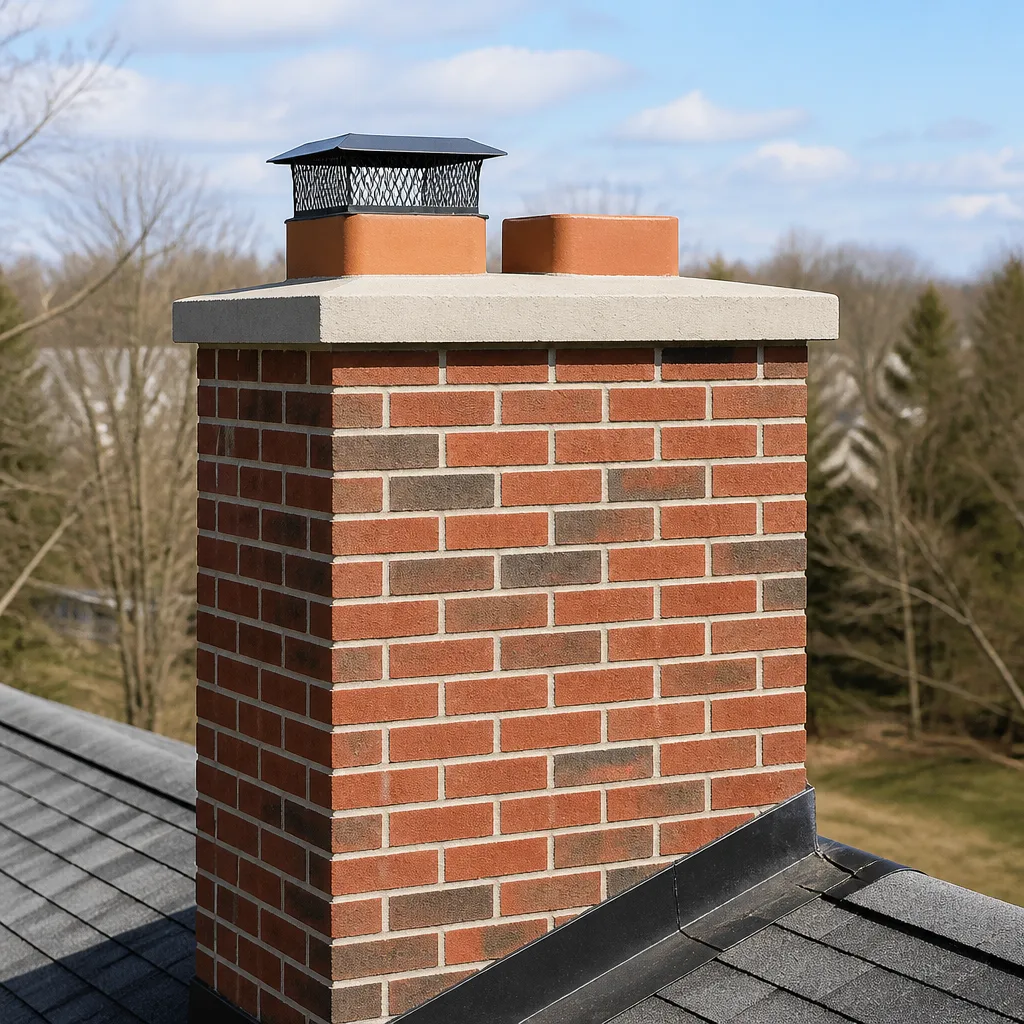
- Missing or damaged chimney caps letting in debris and wildlife. A missing cap is an open invitation during the dry months. Squirrels, birds, and wind-driven debris find their way in. Then the first burn of the season becomes a smoke-filled room and a service call. We install Copperfield stainless caps sized to your flue on nearly every Granite Hills chimney we open up.
Pricing for Chimney Sweep in Granite Hills, CA
A standard chimney sweep in Granite Hills runs $189 – $349, depending on chimney height, roof access, and the condition of the flue. Our flat-price sweep is agreed before we book, not after we arrive. If we find damage during the camera inspection, the repair quote is separate and you’ll see the evidence on screen before anything is sold. A gas fireplace cleaning runs $149 – $249. A Level 2 inspection, which includes roof access and the full camera scan of the flue interior, runs $299 – $449 and is the right choice for any Granite Hills homeowner who just bought the house, had a home inspection flagged, or hasn’t used the fireplace in several years. One thing worth being clear about: we don’t recommend liner replacement, crown rebuilds, or masonry work unless the camera shows a problem we can show you. Call (866) 520-4943 for a free estimate, and we’ll give you a number before we schedule anything.
We Also Serve Cities Near Granite Hills
Our service area covers Granite Hills and the surrounding East County communities. We take calls from Bostonia, Crest, Winter Gardens, and El Cajon every week, and we schedule sweeps around the same seasonal rush that hits all of inland San Diego County. If you’re outside the immediate Granite Hills area, call and we’ll tell you when we’re in your neighborhood. See more about our coverage at Chimney Sweep in Granite Hills.
Serving Granite Hills, CA — Our Local Coverage Area
We’re based in the Granite Hills area and know this community well. Use the map below to see our service coverage — if you’re nearby, we can almost certainly help.
FAQs About Chimney Sweep in Granite Hills
Yes, and in Granite Hills the long idle period is exactly the reason to sweep. During the dry months, acorns, bird nests, dust, and creosote accumulate in the unused flue. The first cold night triggers smoke backup when the blockage prevents drafting. An unused chimney is not a clean chimney. It’s a chimney that’s been collecting debris. Call (866) 520-4943 and we’ll run a camera up the flue and show you what’s in there before we clean it.
A Level 1 inspection covers the accessible portions: firebox, damper, flue interior as far as we can see, and the chimney exterior from the ground. It’s included with every sweep. A Level 2 inspection goes further, with roof access and a full camera scan of the entire flue interior from top to bottom. For Granite Hills homes with original clay-tile liners from the 70s and 80s, a Level 2 is the only way to see cracked tiles, failed mortar joints, or gaps behind the liner. We recommend it before buying a home, after a chimney fire, or if your fireplace hasn’t been used in years.
Third-degree creosote is a hardened, tar-like glaze that forms when creosote sits and recures over repeated heating and cooling cycles. A brush won’t remove it effectively. We identify it with a camera first, then treat it with the appropriate method, which may include a chemical creosote conditioner or mechanical removal with a specialized rotary tool. If the flue has structural gaps, we may recommend HeatShield ceramic resurfacing to seal and restore the liner. You’ll see the video before we touch it. Call (866) 520-4943 and we’ll tell you what we’re working with.
Yes, a missing or damaged cap is the most common entry point for acorns, nesting material, and wildlife in Granite Hills chimneys. Without a cap, the flue is open to everything the dry season brings: squirrels, birds, wind-driven debris, and the dust that blows through during Santa Ana events. We install Copperfield stainless steel caps sized to your flue, and we always check the cap as part of a sweep or Level 2 inspection. Replacing a missing cap is one of the least expensive things we do, and it prevents the most expensive problems.
Yes, we service gas log sets and gas inserts throughout Granite Hills, including homes in the 92021 ZIP. Cleaning a gas fireplace is different because the byproducts are different: fine soot, mineral deposits, and sometimes corrosion on the firebox and venting components. We also check the pilot, thermocouple, and combustion-air flow. Carbon monoxide risk is the reason gas fireplaces need service too, especially if the flue is partially blocked. If you have a gas fireplace in Granite Hills and haven’t had it looked at in a few years, call (866) 520-4943. We’ll get it venting correctly and safely.
Written by Nelson Quijada, Owner at Firebrick Chimney Sweep, serving Granite Hills since day one.