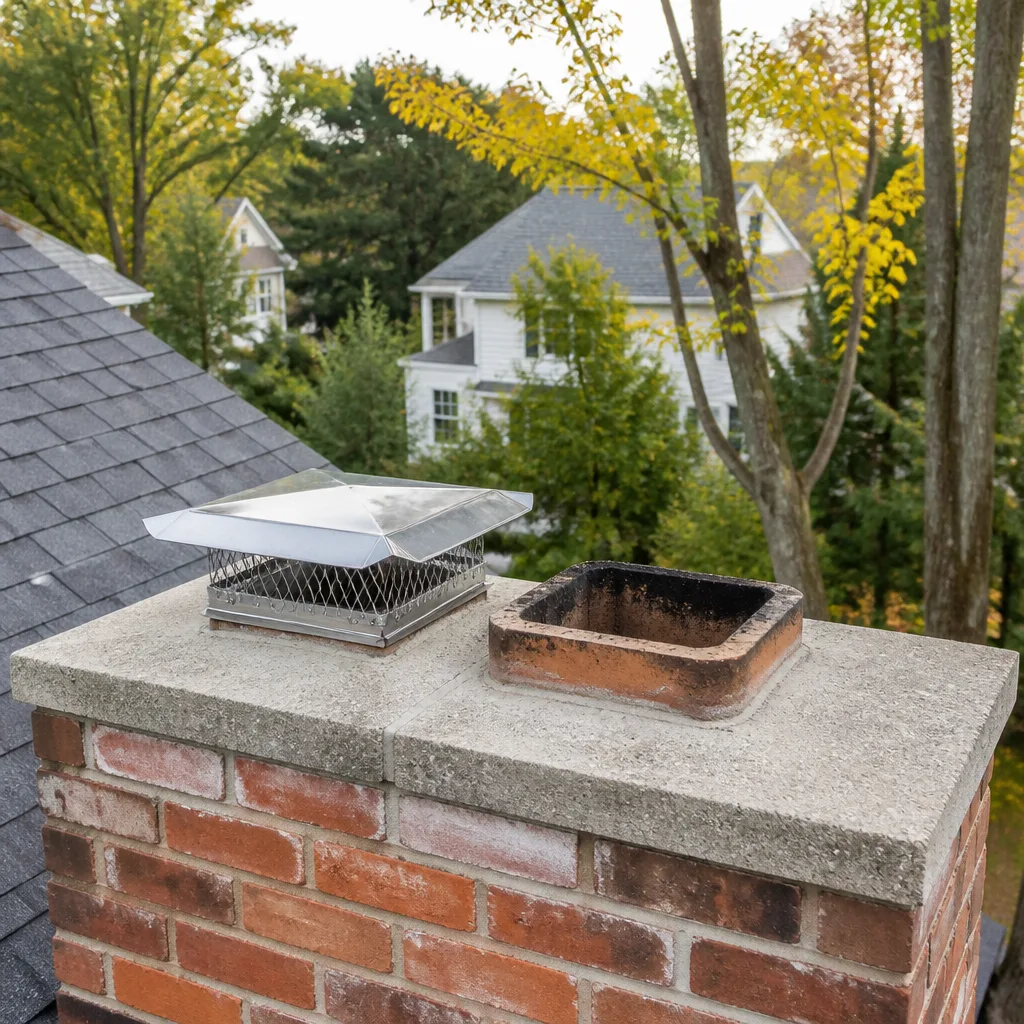
 Sweep & inspection
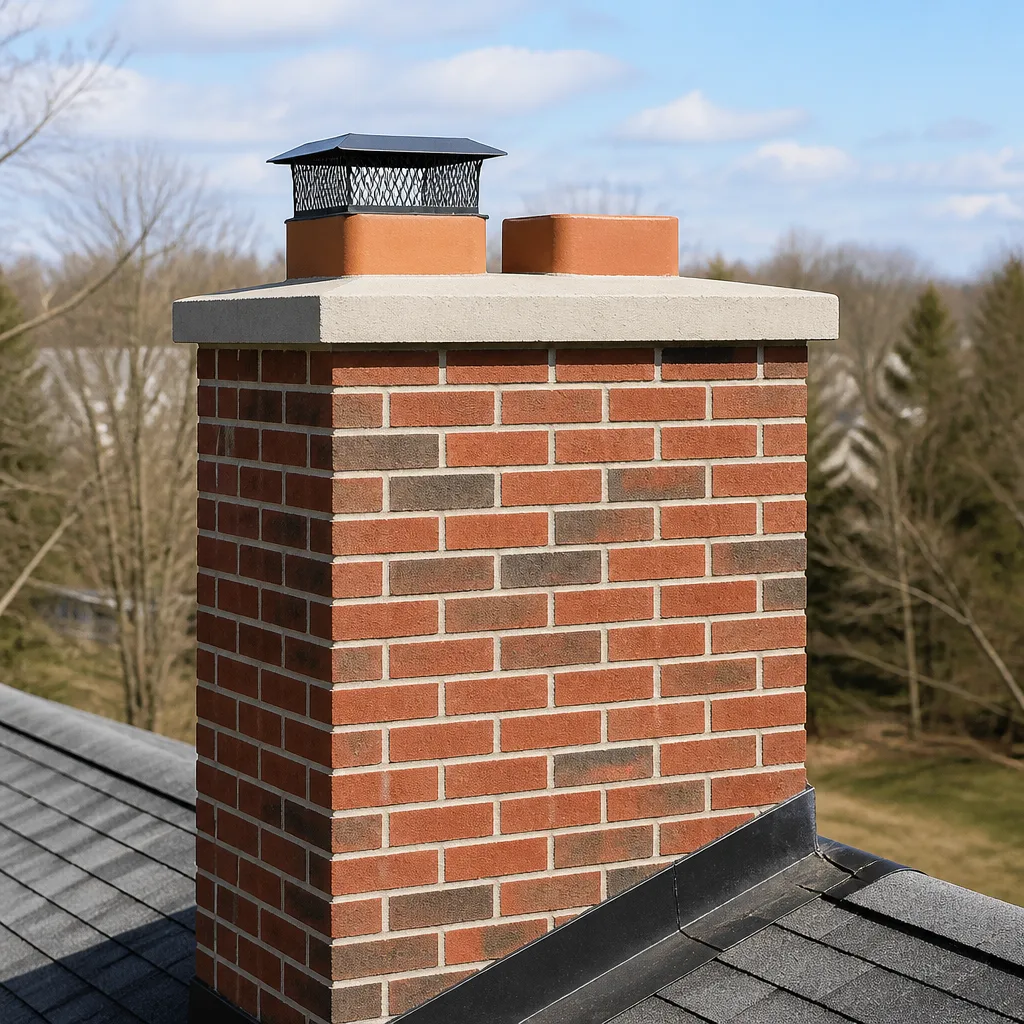 Caps & crowns
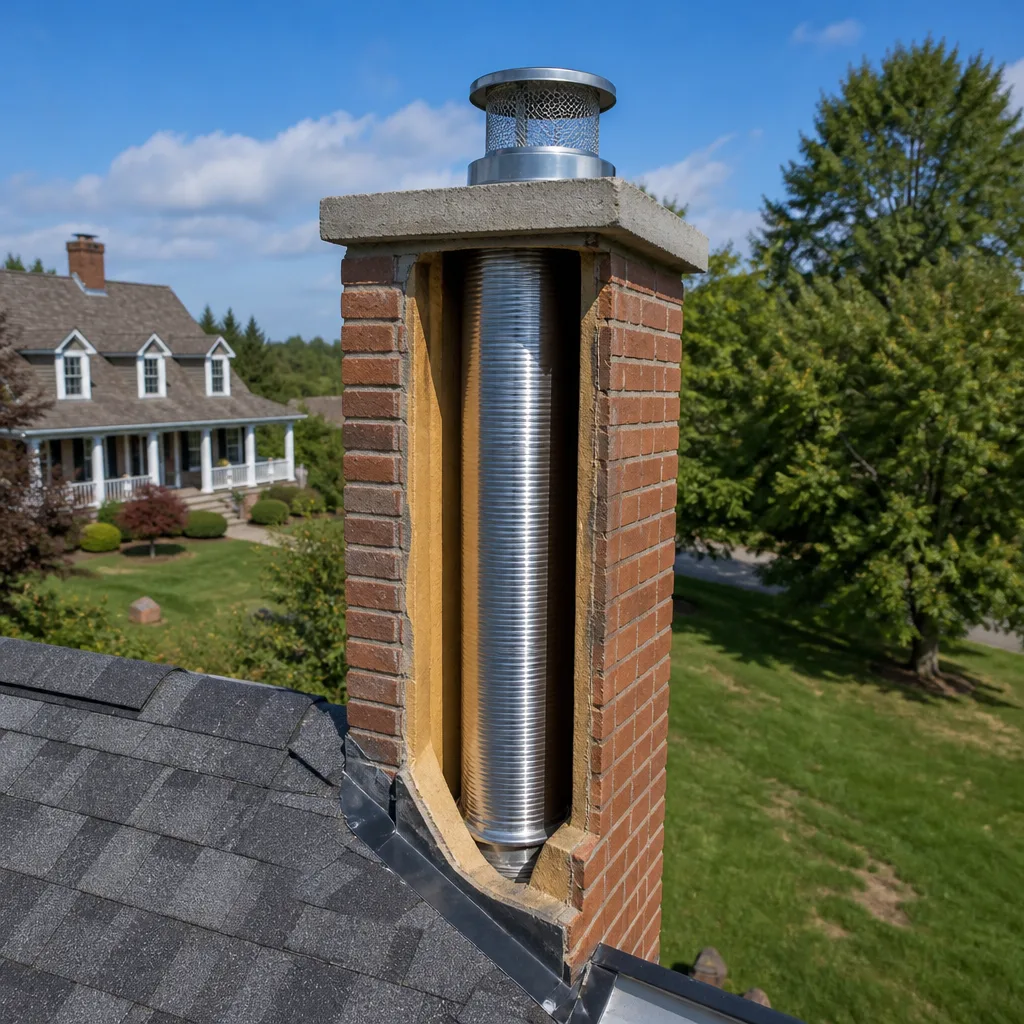 Flue relining
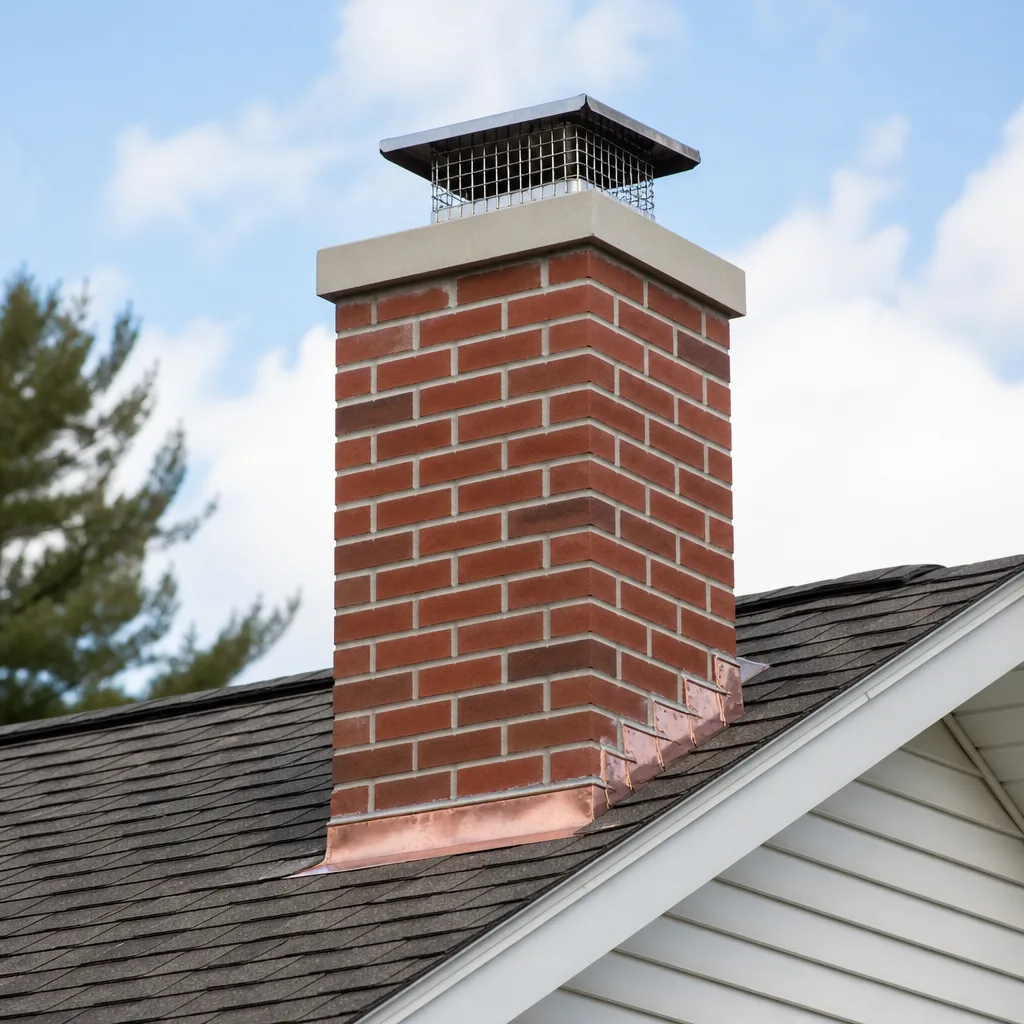 Masonry repair
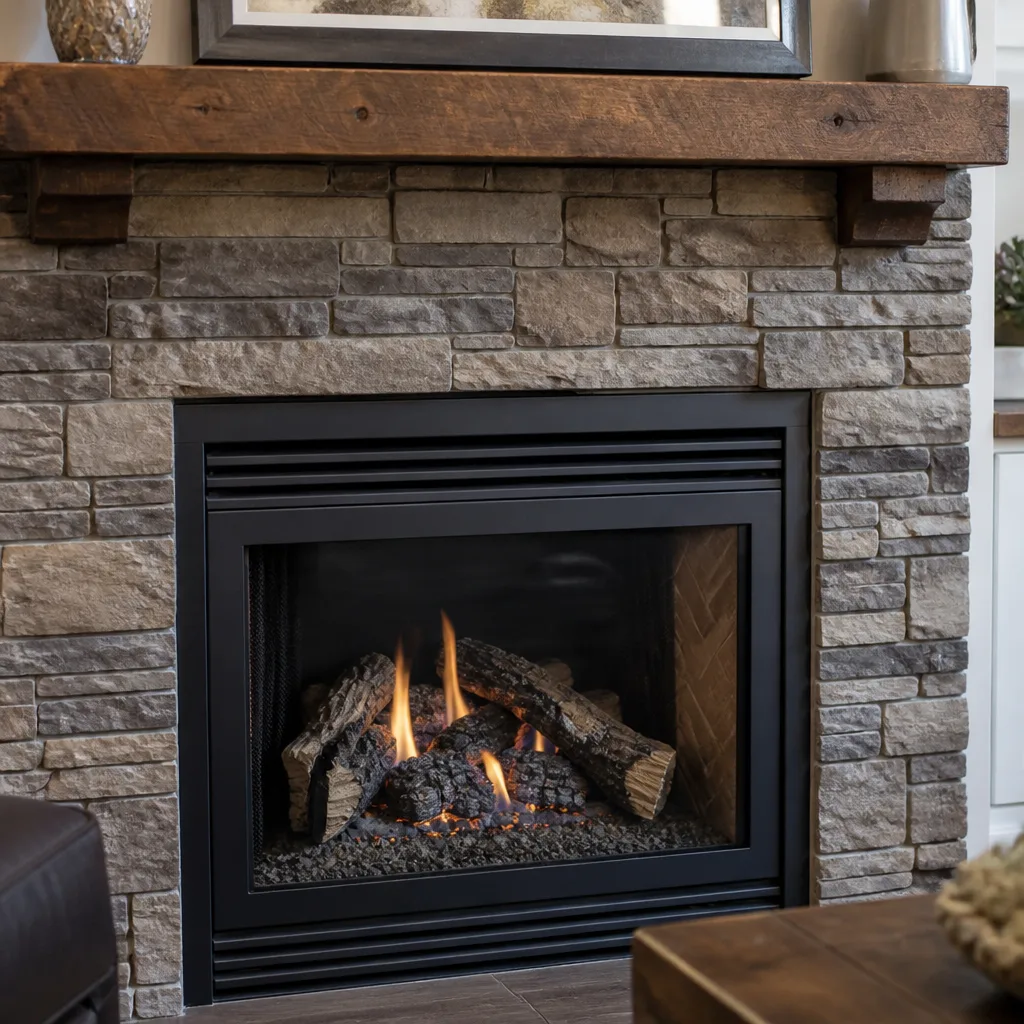 Gas fireplace service
Level 1 sweep and inspection to the NFPA 211 annual standard - flue, crown, cap, and flashing checked and photographed
Chimney sweep logs do not sweep chimneys. They loosen some creosote - which then falls where a brush and vacuum still have to collect it.
HeatShield Chimney Cleaning in Crestline, CA | Firebrick Chimney Sweep
We provide independent HeatShield chimney cleaning and ceramic flue resurfacing across Crestline, CA, all within the 92325 ZIP code. The thing that separates our HeatShield work here from what you’d get down the hill is simple: at roughly 4,500 feet, freeze-thaw cycles and snow loads attack the top of your chimney before anything else fails, and we assess HeatShield liners with that mountain reality in mind. A dirty or damaged liner at this elevation isn’t a maintenance footnote. It’s a fire waiting on a cold night. Call (866) 520-4943 for a free estimate, and we’ll tell you exactly what your flue needs, not what a generic checklist says it might need.
Why Crestline Residents Choose Us for HeatShield Service
We’ve been casting HeatShield ceramic flue liners in Crestline’s masonry and prefab chimneys long enough to know how the system behaves when snow sits on a crown for weeks and a wood stove burns every night from November through March. That’s different from how these liners perform in Rancho Cucamonga or with HeatShield in San Bernardino, and it’s why we don’t treat a Crestline HeatShield job like a lowland one.
Our crew works on HeatShield products as an independent specialty contractor. That means we evaluate, prep, and apply the liner ourselves, and we’ll tell you honestly when a flue isn’t a candidate for resurfacing. Nelson Quijada, our owner, grew up around hillside homes in Hollywood and has spent two decades on chimney systems in mountain and hillside housing. He learned the mechanical fundamentals at Los Angeles Trade-Technical College before narrowing his focus entirely to flue systems, firebox masonry, and draft diagnostics. When a Crestline homeowner calls about a HeatShield liner, Nelson’s the one thinking through how the crown, cap, and freeze-thaw damage interact with the liner surface before we even schedule the inspection.
We also stock HeatShield’s own CeCure and Cerfractory materials for the resurfacing work itself. For caps, dampers, and arrestors, we fit stainless or heavy-gauge replacements, not galvanized hardware that rusts out after three mountain winters. That matters in Crestline, where snow and wind cycles are harder on chimney hardware than almost anywhere else in Southern California.
If you’re looking for a company that understands both HeatShield systems and Crestline weather patterns, you’re in the right place. We handle HeatShield sales & service with the same depth we bring to every chimney we inspect. And if you’re new to the area or just want to confirm coverage, our Crestline service area page lays out exactly where we work.
Styles & brands we work with
Common HeatShield Chimney Cleaning Problems We Solve in Crestline
These are the HeatShield failure modes we see most often in Crestline, and each one ties back to the mountain conditions that make this town different from the cities below the pass.
- Freeze-thaw delamination at the flue top. Crestline winters cycle between snow and thaw constantly. Water seeps into small crown cracks, freezes, expands, and widens them. That meltwater wicks down onto the top of a HeatShield liner surface, and we routinely find delamination or spalling coating right where the flue meets the crown, even when the mid-flue looks sound. A standard annual sweep won’t catch this. Our Level 2 camera inspection does.
- Glazed creosote bonded to the refractory surface. Heavy heating-season wood burning in mountain cabins and A-frames produces a hard, shiny creosote that grips onto HeatShield’s ceramic coating. A standard brush pass won’t scuff it off. We condition the liner surface before sweeping, which protects the refractory layer while removing buildup that would otherwise become a chimney fire hazard by February.
- Hollow-sounding liners over cracked substrate. Many Crestline flues are older clay-tile-lined stacks in 1970s through 1990s builds. Where the original tile has cracked or gapped from decades of settling and thermal cycling, a HeatShield application can’t bond properly over a moving substrate. The result is a hollow-sounding liner that lets smoke leak into the chase. We identify this with a camera inspection before recommending any resurfacing work, and we’ll say plainly when a liner isn’t a candidate.
- Cap loss and animal nesting after wind events. Post-snow wind events tear off caps and spark arrestors all over Crestline. Squirrels and birds move in fast, packing debris against the HeatShield surface and trapping moisture that degrades the coating between heating seasons. We see this pattern every fall when part-time owners arrive for their first weekend and want the chimney checked before lighting a fire.
- Smoke backing into living spaces on the first cold-night fire. A blocked or damaged flue shows itself quickly when cold air meets a fire that hasn’t been lit in months. We get those calls from Crestline homeowners every October and November. The fix often involves clearing debris, assessing the liner, and repairing the cap or crown, not just sweeping the flue and hoping for the best.
HeatShield Service in Crestline: What Local Conditions Mean for Your Equipment
Because Crestline sits at roughly 4,500 feet in the San Bernardino Mountains, our Highland HeatShield service and Crestline assessments here have to account for snow-load and freeze-thaw damage at the crown and cap in a way lowland Southern California jobs never do. The liner surface is usually intact mid-flue while the top of the stack is what’s failing. That changes the order of operations for every HeatShield cleaning we do in the 92325 ZIP code.
Take the Valley of the Moon area of Crestline. On a call up there, a homeowner’s first cold-night fire backed smoke into the living room, and our tech found the cap torn off by a snow-and-wind event with a squirrel nest packed against the top of an older clay-tile flue. After a Level 2 camera inspection confirmed the tiles were sound, we cleared the debris, scuffed the bonded creosote off the flue surface, and cast a HeatShield CeCure liner before fitting a new stainless multi-flue cap. The fireplace drafted cleanly that same evening. That sequence, check the crown, assess the liner, address the cap, is how we approach most HeatShield work in Crestline, because that’s what the elevation and weather demand.
In neighboring lowland cities like HeatShield repair in Muscoy or Riverside, you don’t get that same crown-and-cap stress. In Crestline, you do, and it shapes every inspection we perform.
HeatShield Models & Products We Service in Crestline
We service the full HeatShield product range for Crestline homes, including the CeCure Sleeve cast-in-place liner for masonry flues, the Cerfractory Flue Sealant and resurfacing system for clay-tile flues, and HeatShield’s firebox and smoke-chamber resurfacing materials. Each has its own application method and its own failure points at mountain elevation, and we know which one your chimney actually needs after a camera inspection.
We use HeatShield’s own CeCure and Cerfractory materials for the lining and resurfacing work itself. For caps, dampers, and arrestors, we’d rather fit quality stainless or heavy-gauge replacements than cheap galvanized that rusts out in a few mountain winters. No OEM-branded knockoffs, no consumer-grade substitutes from the hardware store. We’d rather repair and reline a sound flue than talk a homeowner into a rebuild, and we’ll say so when a flue is too far gone for a cast liner.
See the difference
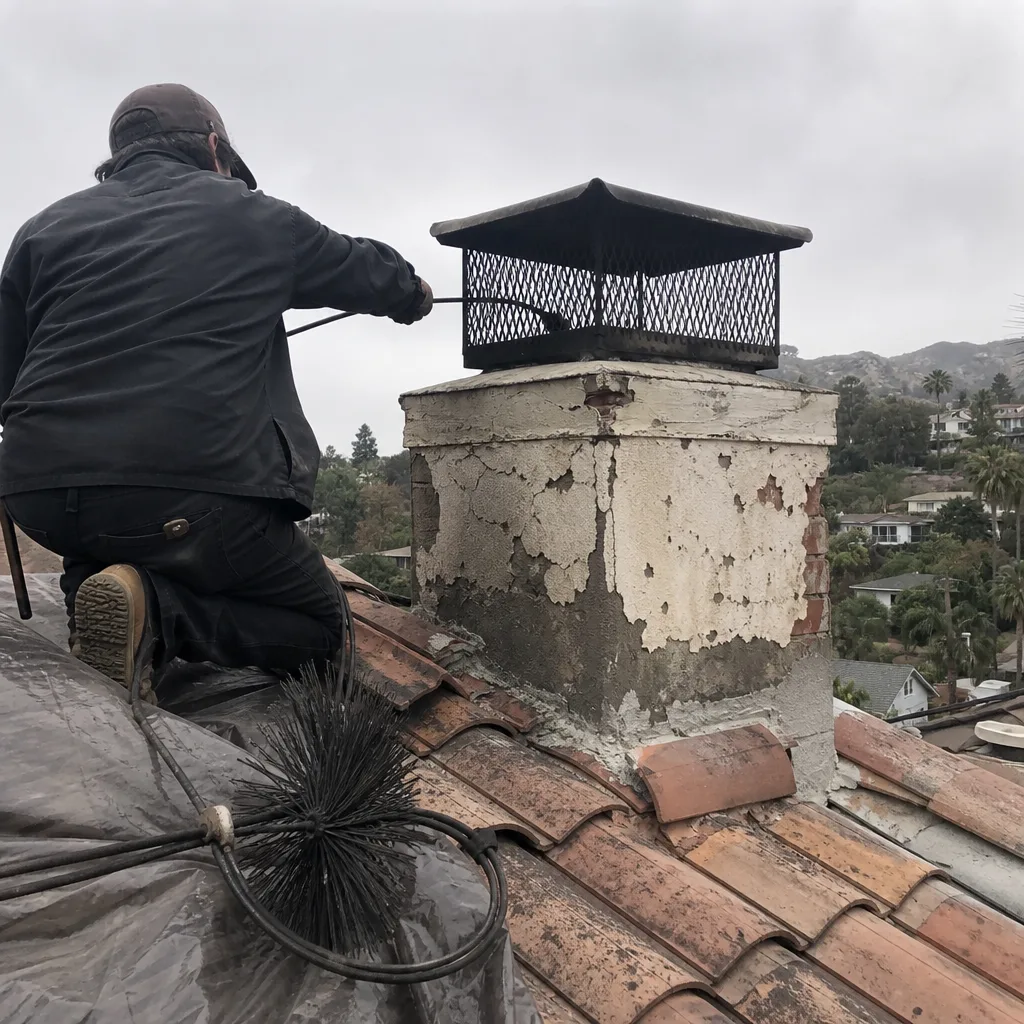 Before
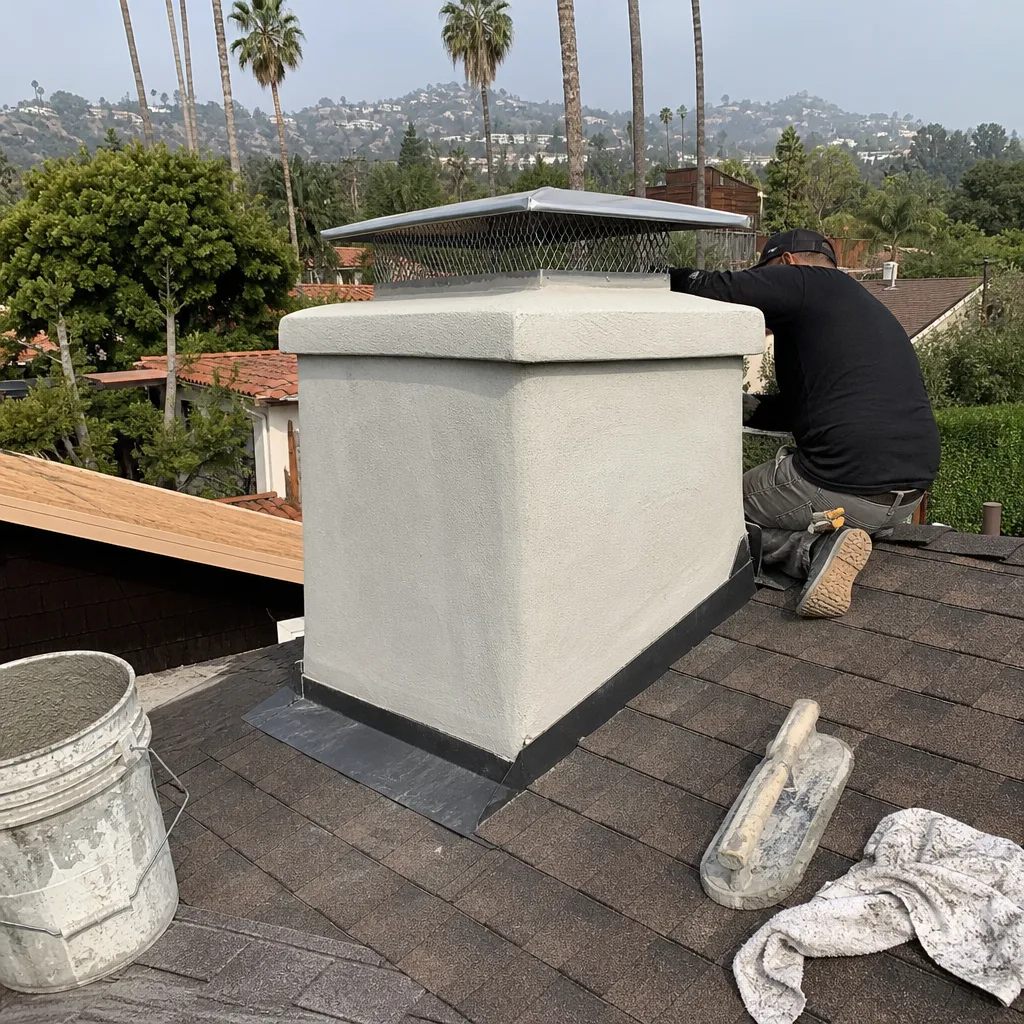 After
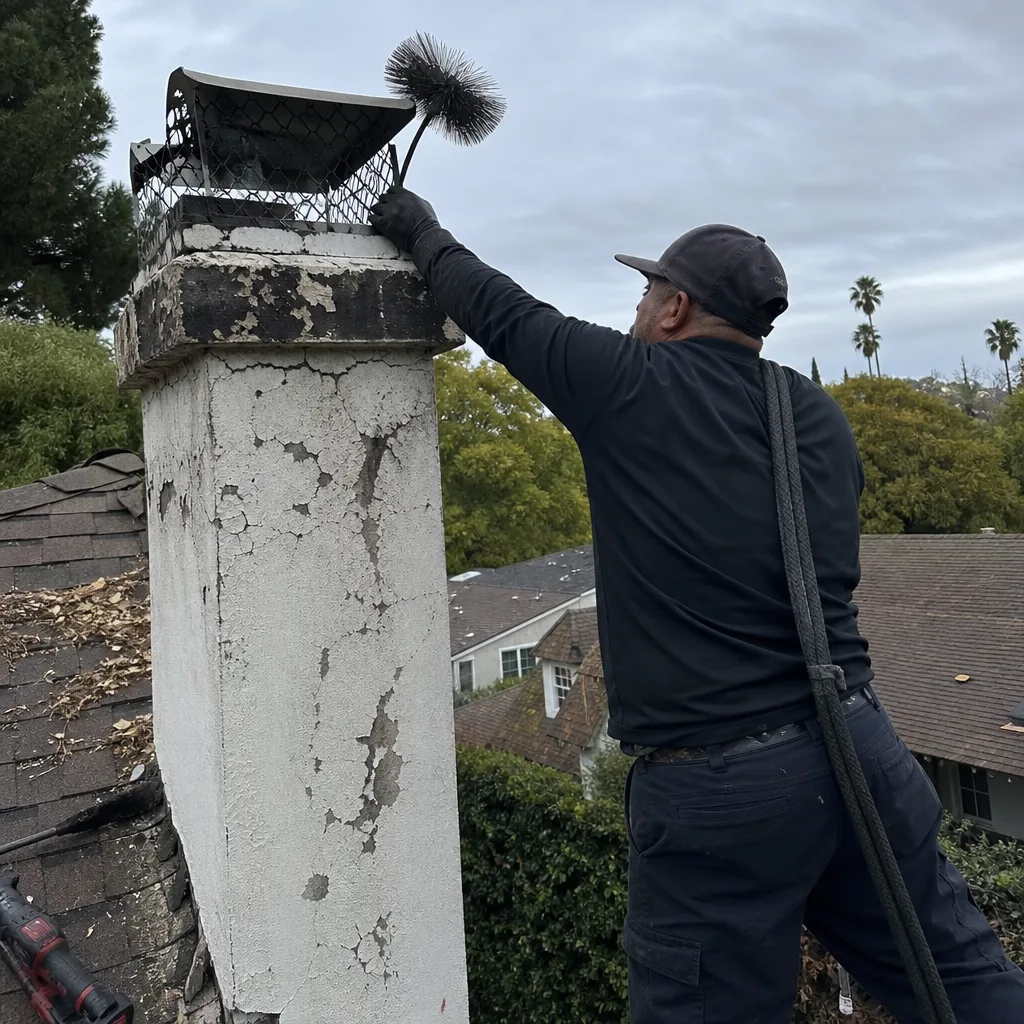 Before
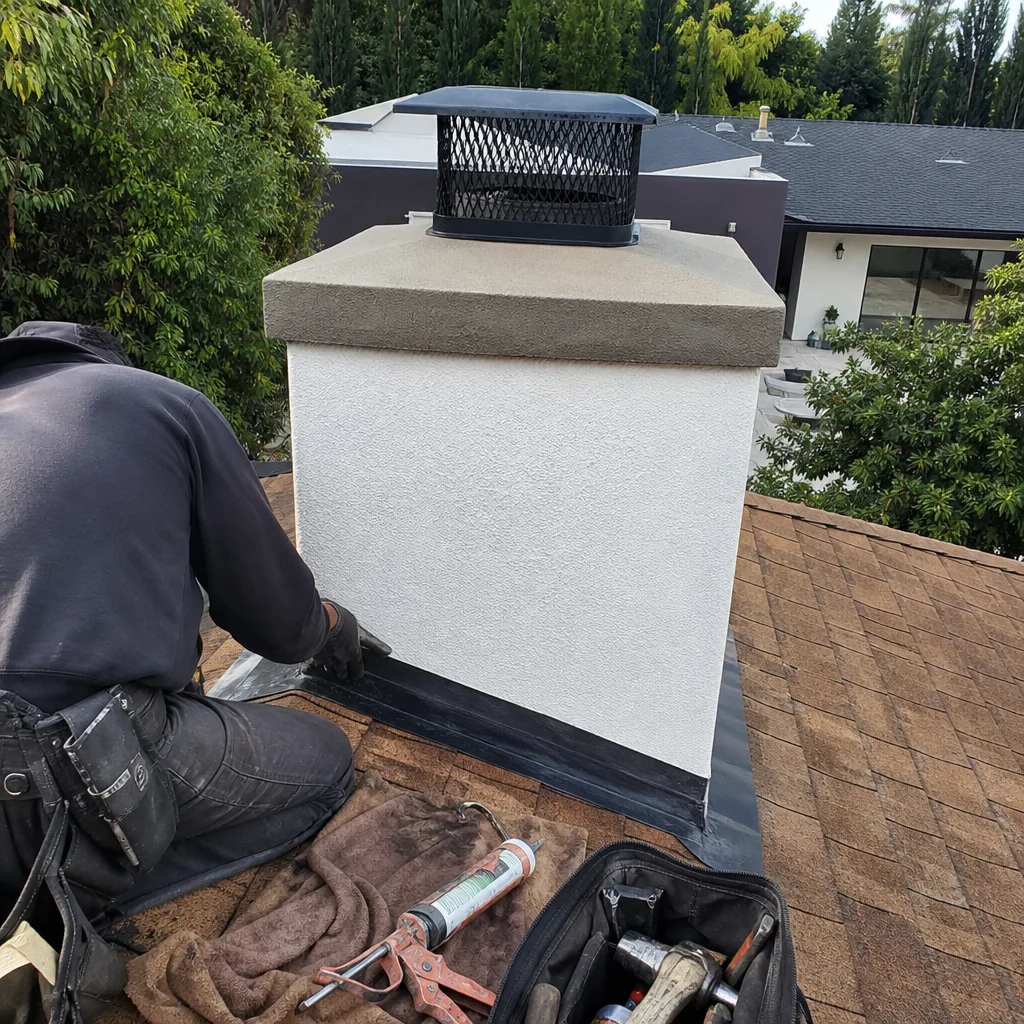 After
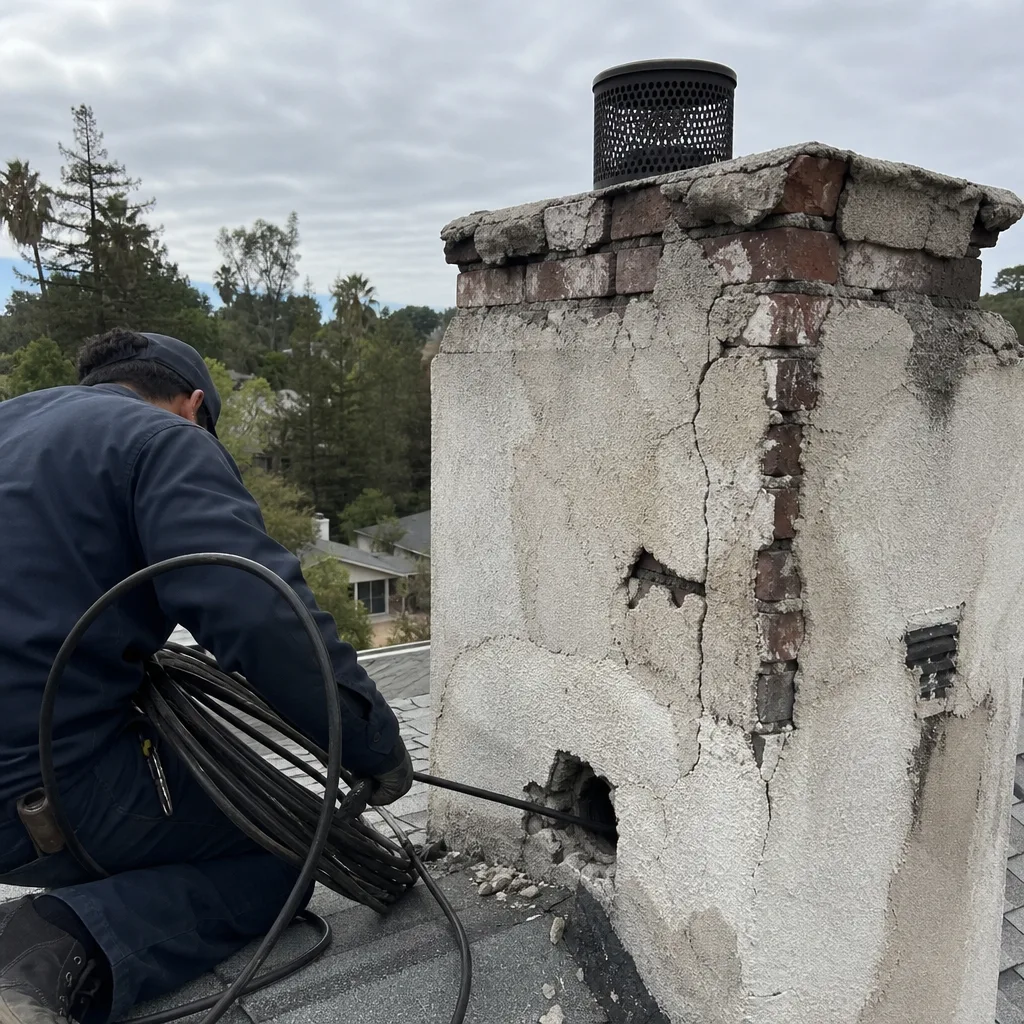 Before
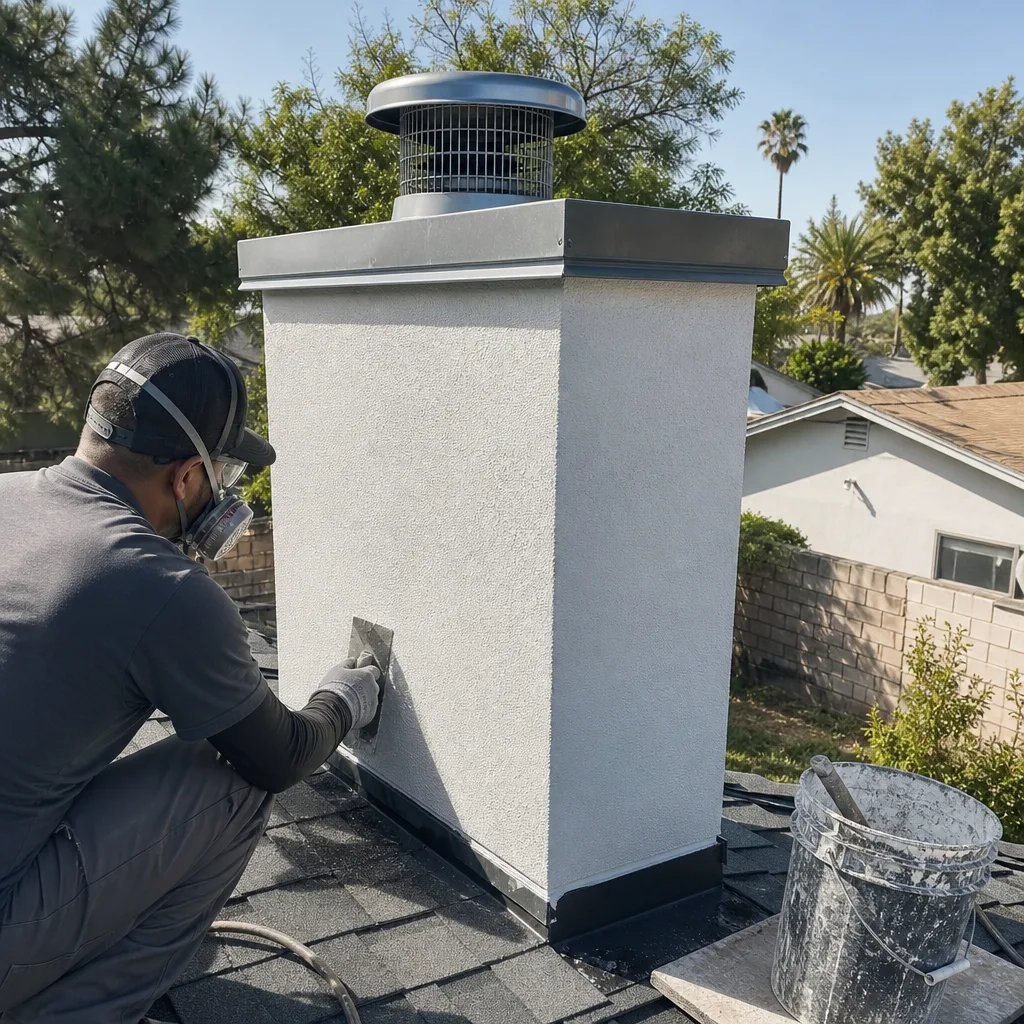 After
HeatShield Service Pricing in Crestline
HeatShield chimney cleaning and resurfacing in Crestline varies depending on what the camera inspection shows. A straightforward HeatShield-conditioned sweep runs between two and four hundred dollars for most single-flue homes in the 92325 area. HeatShield CeCure liner installation for a typical masonry flue ranges from $3,500 to $7,000 depending on flue height, access, and whether crown repair is needed first. A Level 2 camera inspection, which we recommend before any resurfacing work, typically falls between $300 and $500.
What drives the cost in Crestline specifically is crown and cap condition. If the crown is cracked from freeze-thaw or the cap is missing, that work has to happen before or alongside the liner, and it’s line-itemed separately on our estimate. Our free estimate includes a visual assessment, and we’ll tell you what’s necessary now versus what can safely wait until spring.
Call (866) 520-4943 for an exact quote. We don’t price from a distance, we look at your chimney first.
Serving Crestline, CA — Our Local Coverage Area
We’re based in the Crestline area and know this community well. Use the map below to see our service coverage — if you’re nearby, we can almost certainly help.
FAQs – HeatShield Chimney Cleaning in Crestline
Is a HeatShield liner worth it on a Crestline cabin that burns wood all winter?
For a full-time wood-burning cabin in Crestline, a HeatShield liner is one of the best investments you can make in the chimney system, especially if your existing flue is unlined or clay-tile lined and showing gaps. The CeCure cast-in-place liner seals the flue and gives you a smooth, insulated surface that handles heavy creosote-producing burns better than raw masonry. But it only works if the underlying structure is sound, which is why we camera-inspect before recommending it. Call (866) 520-4943 for an honest assessment and a firm quote.
Why did my Crestline chimney cap go missing after the last storm?
High wind and heavy snow events in the San Bernardino Mountains regularly tear off chimney caps that aren’t mechanically secured or have rusted through at the base. We see this most often in Crestline’s steeper lots where chimneys get the full brunt of wind coming over the ridge. If your cap is gone, you’re exposed to rain, snow, and animals, all of which damage the liner surface and can create a fire hazard. We replace missing caps with stainless multi-flue caps and secure them properly for mountain wind loads.
Do you need a Level 2 inspection before doing HeatShield work on my house?
Yes, and we insist on it. A Level 2 camera inspection is the only way to know whether your existing flue tiles are intact, whether the crown and cap are structurally sound, and whether a HeatShield application will bond properly. In Crestline, where freeze-thaw and settling have stressed many 1970s through 1990s masonry stacks, skipping the camera inspection is how homeowners end up with a liner that fails in two winters. We include a photo report with every Level 2 inspection so you can see what we see.
My Crestline house is a weekend place and the fireplace sat unused all summer. What should I check first?
Check the cap and the top of the flue first, because that’s where Crestline’s summer wind events and animal activity do the most damage. Squirrels and birds nest in open flues during the off-season, and a cold-night fire in October will send that smoke right back into your house. Before you light anything, have us do a visual and camera check for nesting debris, crown cracks, and liner surface damage. The cost of that inspection is a lot less than the cost of a chimney fire or a smoke-filled cabin.
Can a HeatShield liner fix a draft problem in an older Crestline A-frame?
Yes, often. Many older Crestline A-frames have chimneys that are oversized for the stove or fireplace they serve, which causes poor draft and cold-air backflow. A HeatShield liner reduces the effective flue diameter and smooths the interior surface, which can significantly improve draft and reduce creosote accumulation at the same time. But draft problems also come from crown leaks, animal debris, or stove design issues that no liner will fix. We diagnose the whole system before recommending a liner, and we’ll tell you if the draft issue is something else entirely.
Service Areas Near Crestline
Our HeatShield service work extends from Crestline throughout the San Bernardino Mountains and the Inland Empire. We regularly serve Lake Arrowhead, Running Springs, Blue Jay, and Twin Peaks, plus lower-elevation communities like San Bernardino and Rialto where chimney conditions are entirely different. For HeatShield work in the Loma Linda area, see HeatShield service in Loma Linda. For the Mead Valley side of the region, HeatShield service in Mead Valley covers that territory.
Book Your HeatShield Service in Crestline Today
Call (866) 520-4943 and we’ll schedule a camera inspection and free estimate for your HeatShield chimney work in Crestline. We’ll tell you what’s failing, what can wait, and what a fair price looks like for this mountain, this chimney, and this heating season.
Written by Nelson Quijada, Owner at Firebrick Chimney Sweep, serving Crestline, Lake Arrowhead HeatShield service, and the San Bernardino Mountains for more than two decades.